Introduction
Nigel Farage, the prominent British politician and former leader of the UK Independence Party (UKIP), has been a polarising figure in British politics. His views on immigration, sovereignty, and European integration have gained him both fervent supporters and staunch critics. Recently, his comments regarding the European Court of Human Rights (ECHR) have reignited discussions around the court’s influence on British law and sovereignty, making this a highly relevant topic in contemporary political discourse.
Background on the ECHR
The ECHR was established in 1959 to enforce the European Convention on Human Rights, which protects fundamental rights and freedoms across its member states. With Brexit reshaping the UK’s relationship with European institutions, the ECHR has been at the heart of debates surrounding human rights law in the country. Farage has been an outspoken critic of the court, often arguing that it undermines British sovereignty and democratic processes.
Recent Comments by Farage
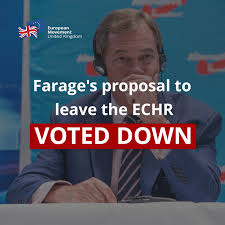
In a recent interview, Farage articulated his views on the ECHR, claiming that the court has overstepped its jurisdiction by interfering in UK domestic policy. Farage highlighted specific cases where he believes the ECHR has had negative implications for the UK, particularly in relation to immigration and deportation policies. He has called for the UK government to reassess its commitment to the court and consider withdrawing from its jurisdiction entirely. This call reflects a growing sentiment among certain political factions in the UK that argue for greater control over national law.
Public and Political Reaction
Farage’s comments have sparked a mixed response from the public and political leaders. Supporters agree with his stance, citing cases where they feel the ECHR has hindered the UK’s ability to enact necessary immigration reforms. Conversely, critics argue that distancing the UK from the ECHR could jeopardise human rights protections that many citizens depend upon. Legal experts warn that leaving the ECHR might significantly alter the landscape of human rights law in the UK and could lead to complications in international relations, especially with European countries.
Conclusion
The debate surrounding Nigel Farage’s comments on the ECHR underscores the ongoing tensions between national sovereignty and international human rights frameworks. As the UK continues to navigate its post-Brexit identity, the discussions surrounding the ECHR will likely remain a focal point in political dialogues. The stance taken by Farage and his supporters may influence future legislative actions and public opinion, signalling that this is an issue that will continue to resonate in the UK’s political narrative. For readers, understanding these dynamics is crucial as they could directly impact rights and legislation in the near future.