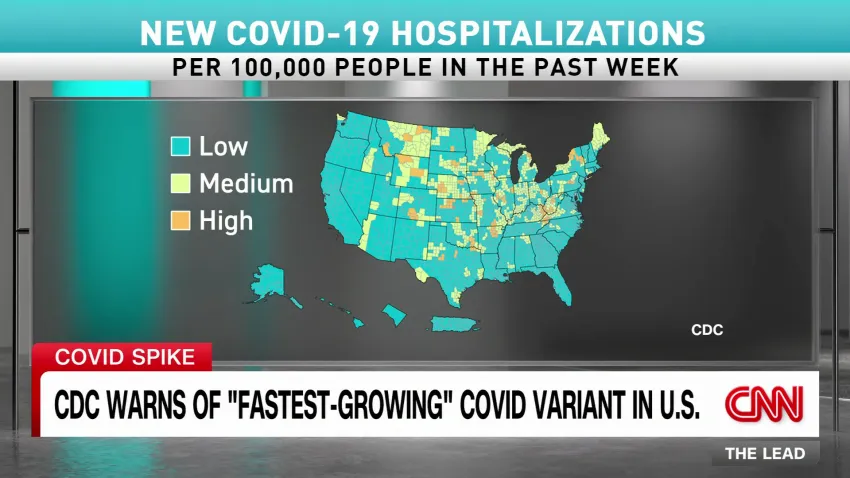
As the world continues to navigate the ongoing challenges posed by COVID-19, a new variant known as BA.3.2, or ‘Cicada’, has emerged, raising concerns among health officials and the public alike. This variant, which is a descendent of BA.3, an omicron subvariant that emerged in 2022, was first identified in South Africa in November 2024 and has since spread to at least 25 states in the United States.
BA.3.2 is characterized by its significant mutations, boasting 70-75 changes in its spike protein. These mutations may allow it to evade immunity from vaccines or prior infections, which has led to heightened vigilance from health authorities. The World Health Organization classified BA.3.2 as a ‘variant under monitoring’ in December 2025, reflecting the global concern surrounding its potential impact.
Initial reports indicate that BA.3.2 has been detected in wastewater samples, suggesting its presence in the community. As of February 11, 2026, the variant has spread to at least 23 countries, with approximately 30% of COVID-19 sequences in Germany attributed to it.
Despite these alarming developments, health experts are cautiously optimistic. Dr. Adolfo García-Sastre noted, “The new variant is still sensitive to COVID antiviral drugs that we have been developing, so at least those will work.” Furthermore, current COVID vaccines are expected to continue providing protection against severe disease caused by BA.3.2.
Symptoms associated with BA.3.2 appear to be similar to those of other COVID-19 variants, including cough, fever, sore throat, and fatigue. However, Dr. Robert H. Hopkins, Jr. reassured the public, stating, “I have not seen any data which indicates that Cicada is any more severe than other circulating variants.”
Andrew Pekosz, Ph.D., highlighted the variant’s increasing presence but emphasized that it hasn’t caused a significant surge of infections anywhere, saying, “It’s increasing, but it hasn’t really caused a huge surge of infections anywhere.” This sentiment is echoed by the CDC, which continues to monitor the situation closely.
While the emergence of BA.3.2 raises important questions about the future trajectory of the pandemic, details remain unconfirmed regarding its exact impact on public health and its potential to cause a surge in cases. The effectiveness of current vaccines against this new variant also requires further research.
As communities across the United States remain vigilant, health officials urge everyone to stay informed and continue practicing recommended safety measures. The ongoing collaboration between the CDC, WHO, and local health departments will be crucial in managing the spread of BA.3.2 and ensuring public safety.