Background on the Van Allen Probes
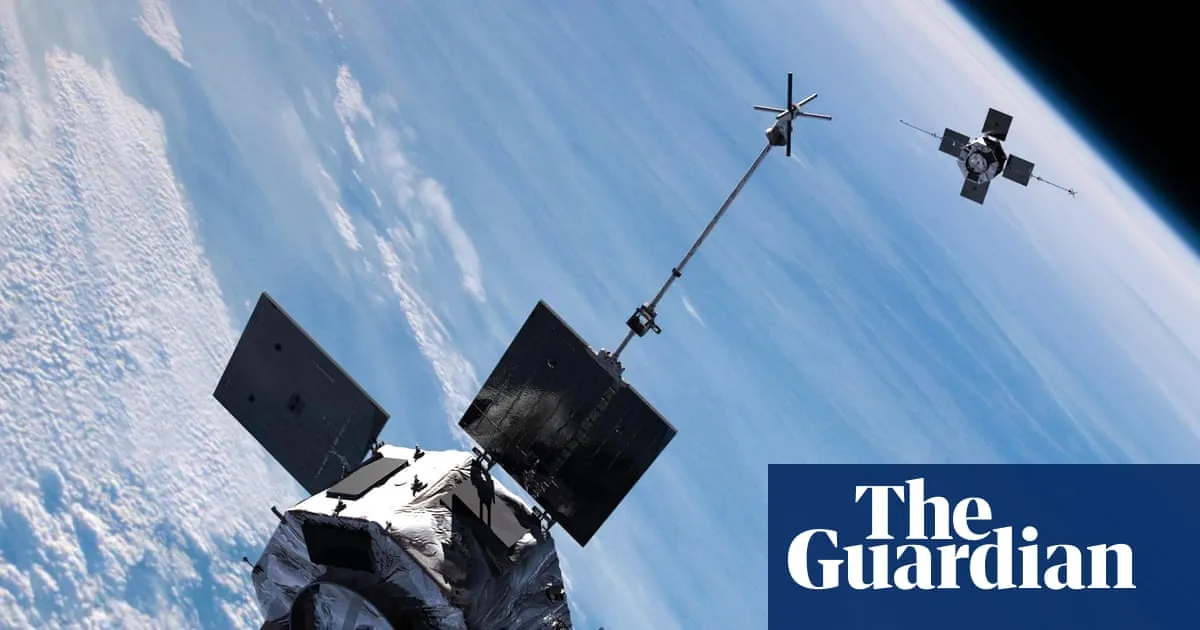
The Van Allen Probe A and its twin, Van Allen Probe B, were launched on August 30, 2012, with the primary mission of studying the radiation belts surrounding Earth. These satellites have provided valuable insights into the complex interactions between solar activity and the Earth’s magnetic field. However, the mission for Van Allen Probe A officially ended in 2019 when it ran out of fuel, leading to the current situation where it is expected to re-enter the atmosphere.
Upcoming Re-Entry Details
NASA has announced that the Van Allen Probe A is projected to re-enter Earth’s atmosphere on March 10, 2026, at approximately 7:45 p.m. EDT. The spacecraft weighs about 1,323 pounds (600 kg), and while most of it is expected to burn up upon re-entry, some components may survive the descent through the atmosphere. This event marks a significant moment in the satellite’s lifecycle, transitioning from its scientific mission to a controlled descent.
Risk Assessment
Officials from NASA have assessed the risk associated with the satellite’s re-entry. They estimate that the chance of harm to a person on Earth is approximately 1 in 4,200. Mark Matney, a NASA official, emphasized that “the odds that you will be hit are one in several trillion, so quite low for any particular person.” This assessment is reassuring for the public, as it indicates that the likelihood of debris causing injury is minimal.
Monitoring the Situation
In light of the upcoming re-entry, both NASA and the U.S. Space Force will continue to monitor the situation closely. They have committed to updating predictions as more data becomes available. Experts have noted that satellite re-entries are fairly common and rarely pose any real danger to people on Earth. The monitoring efforts will help ensure that any potential risks are managed effectively.
Environmental Considerations
About 71% of Earth’s surface is covered by water, which significantly reduces the likelihood of debris causing harm to populated areas. This geographical factor plays a crucial role in mitigating the risks associated with satellite re-entries. However, the exact location where any surviving fragments might land remains difficult to predict, and details remain unconfirmed.
The Van Allen Probe A was initially projected to re-enter the atmosphere around 2034. However, increased solar activity has accelerated its descent, leading to the earlier-than-expected re-entry timeline. This change highlights the dynamic nature of space missions and the various factors that can influence satellite trajectories.
Conclusion and Future Outlook
As the date of re-entry approaches, NASA and the U.S. Space Force will provide ongoing updates to the public. The situation serves as a reminder of the complexities involved in space exploration and the importance of monitoring space debris. With the risk to human safety assessed as low, the focus will remain on ensuring a safe re-entry for the Van Allen Probe A.