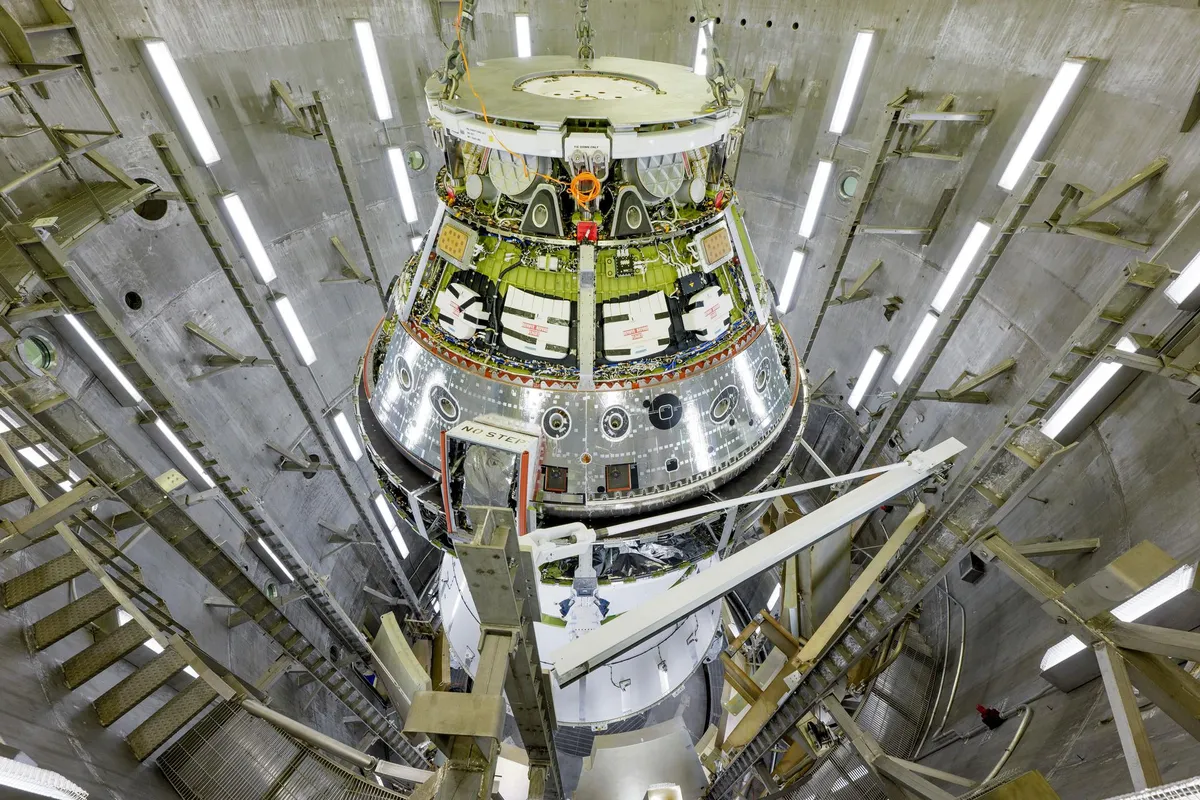
The recent Artemis II mission marked a significant milestone for NASA as the Orion spacecraft safely splashed down in the Pacific Ocean on April 10, 2026. Initial expectations were cautious, especially after the unexpected damage observed in the heat shield during the Artemis I mission. Concerns lingered about whether the same issues would arise again.
However, this time, the results were promising. The Orion heat shield kept the crew safe during re-entry, which reached speeds of 37,000 km/h—about 35 times the speed of sound. NASA reported that initial inspections found it performed as expected, with no unusual conditions identified.
One standout improvement was the char loss behavior observed on Artemis I; it was significantly reduced in Artemis II. NASA’s adjustments to the re-entry trajectory helped minimize heat build-up, a decision that likely contributed to this success.
Charles Camarda, a former astronaut and current NASA advisor, emphasized the importance of these findings. “The char loss behavior observed on Artemis I was significantly reduced, both in terms of quantity and size,” he noted. This feedback reassures not only engineers but also future astronauts who will rely on this technology.
The heat shield is covered with special AVCOAT tiles designed to absorb extreme impact heat—essential for protecting astronauts from temperatures that soar into thousands of degrees Celsius during re-entry. After splashdown, Navy divers photographed the shield shortly after it was recovered.
Yet not everything went smoothly; there were issues with the life support system’s space toilet during flight. Such hiccups remind us that space travel remains a complex endeavor.
Looking ahead, NASA has ambitious plans. The Artemis III mission is set for 2027 and aims to land astronauts on the Moon’s surface. Following that, Artemis IV is scheduled for 2028, targeting a landing at the Moon’s south pole. Each mission builds upon lessons learned from previous flights.
The successful performance of the heat shield in Artemis II provides a critical foundation for these future missions. As Christina Koch, another astronaut involved in these missions, stated: “We did not detect any unusual conditions or critical anomalies.” This assurance is vital as humanity prepares for deeper space exploration.
As we reflect on this achievement, it’s clear that each step forward helps solidify our understanding of space travel and enhances safety for those who dare to journey beyond our planet.