The Artemis II mission is poised to make history as the first crewed lunar mission in over 50 years, with a scheduled launch date of April 4, 2026. This groundbreaking mission will feature a crew of four astronauts: Reid Wiseman, Victor Glover, Christina Koch, and Jeremy Hansen, who will embark on a journey to observe the moon.
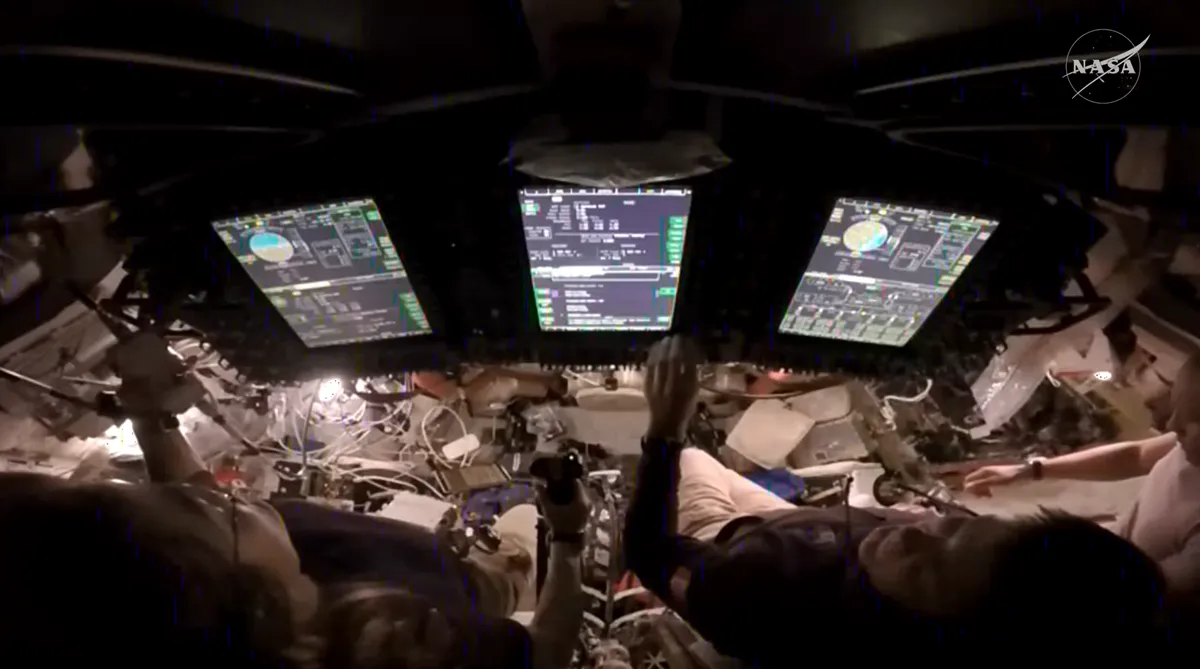
On flight day 4, the Artemis II crew successfully completed a 41 minutes manual piloting demonstration, showcasing their skills and readiness for the mission ahead. As part of their preparations, the astronauts reviewed a list of 15 distinctive lunar surface features they plan to photograph during their flyby.
During their mission, the crew will observe the moon from approximately 4,000 miles above its surface, spending about six hours on April 6 to capture images of significant features such as the Orientale basin and Ohm crater. The Orientale basin, which formed around 3.8 billion years ago, is one of the largest impact basins on the moon.
Wiseman expressed the unique perspective they will have, stating, “The Earth is almost in full eclipse. The moon is almost in full daylight, and the only way you could get that view is to be halfway between the two entities.” Koch added, “Being human up here is one of the coolest things about this mission,” highlighting the significance of their journey.
The Orion capsule, which will house the astronauts, has a habitable volume roughly equivalent to a camper van, providing a comfortable environment for the crew during their 10 days in space. The mission will also allow the astronauts to be the first humans to see the far side of the moon while it is illuminated.
Kelsey Young, a mission planner, noted the importance of human observation, stating, “The human eye is the most nuanced detector there is, especially when connected to a well-trained human brain.” This emphasizes the value of having astronauts on board to gather data and insights during the mission.
As excitement builds for the Artemis II mission, observers eagerly await the crew’s observations and the scientific data that will emerge from this historic journey. The mission not only marks a significant milestone in space exploration but also rekindles humanity’s connection to the moon.