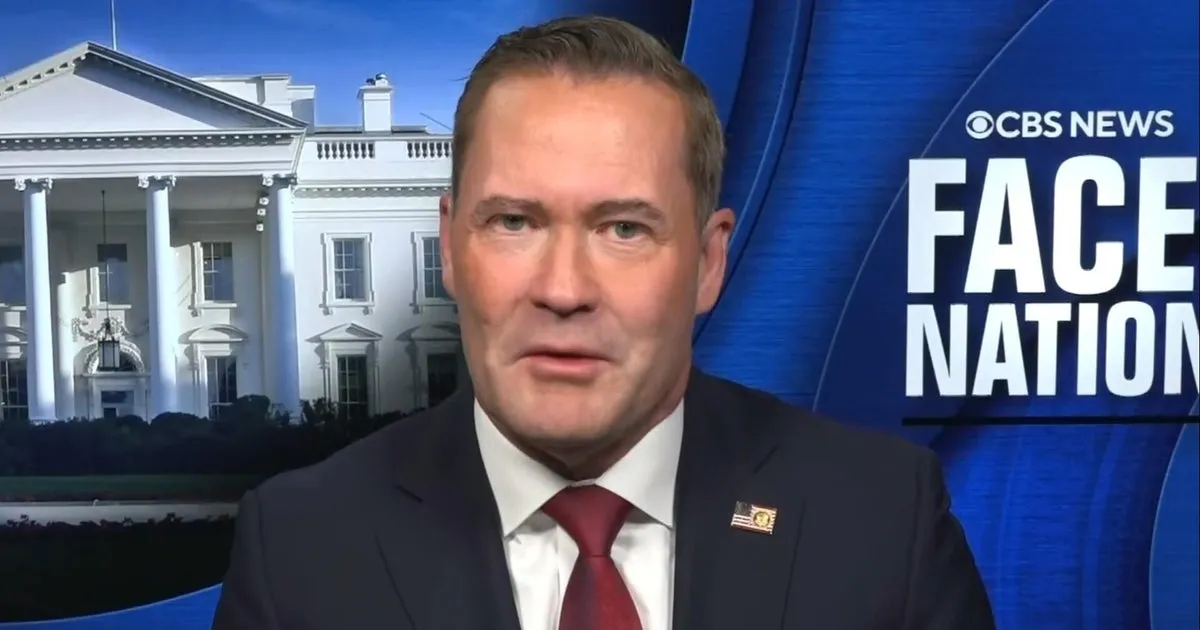
“The U.S. is ‘never going to take an approach of trust’ with Iran,” said Mike Waltz, the U.S. ambassador to the United Nations. His words resonate deeply in a world where diplomatic relations are fraught with tension and uncertainty.
Waltz’s remarks come against a backdrop of escalating hostilities between the U.S. and Iran, a relationship that has been rocky since the Iranian Revolution in 1979. The U.S. has accused Iran of undermining regional stability, claiming that it has placed the nation “in chaos.” This chaos is evident in various aspects of Iranian society and governance.
During his address, Waltz emphasized that Iran’s isolation has reached unprecedented levels. “Iran’s never been more isolated,” he stated, highlighting the recent support for a U.N. resolution condemning Iran’s actions—135 nations joined this call for accountability.
The Iranian economy is currently in freefall, grappling with the consequences of a maximum pressure campaign led by the United States. This campaign is designed to cripple Iran economically while enforcing a blockade via the U.S. Navy to prevent further aggression.
Moreover, Waltz pointed out that “the president’s objectives and red lines have been very clear. It cannot and will not ever have a nuclear weapon.” This statement underscores a critical aspect of U.S. policy towards Tehran—maintaining strict limits on its nuclear ambitions.
But it’s not just about economic sanctions or military posturing; it’s about leadership dynamics within Iran itself. Waltz noted, “The Iranian command and control and government is in absolute disarray because of the devastating attacks across its leadership.” This internal turmoil could have significant implications for both Iranian citizens and international diplomacy.
As these tensions unfold at the United Nations in New York, ordinary lives hang in the balance—both in Iran and among those affected by U.S. policies worldwide. The consequences of these diplomatic stances will be felt far beyond boardrooms and press conferences.
Details remain unconfirmed regarding future negotiations or potential shifts in strategy, but one thing is clear: as long as mistrust reigns supreme, meaningful dialogue remains elusive.