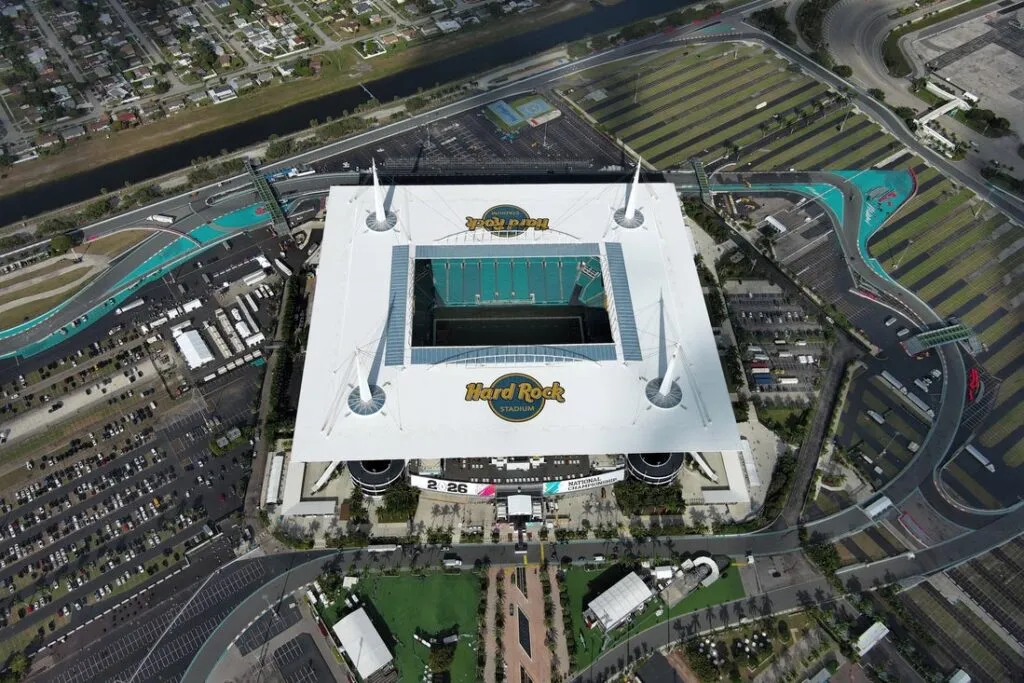
Miami’s Hard Rock Stadium has fallen out of the Super Bowl hosting rotation due to changes in the surrounding area and insufficient hospitality space. The NFL no longer considers it suitable for future Super Bowls, highlighting a shift in what is required to host such a major event.
Historically, Miami has hosted 11 Super Bowls, tying with New Orleans for the most in history. However, the last time Hard Rock Stadium was home to the big game was in 2020. Since then, developments around the stadium have focused more on events like the Miami Open and Formula 1, leaving less room for accommodating large crowds that a Super Bowl demands.
The NFL’s decision stems from its belief that Hard Rock Stadium lacks enough hospitality area to meet current standards. Stephen Ross, owner of the Miami Dolphins, acknowledged this shortcoming, stating, “They don’t believe we meet all the requirements and the demands.” This sentiment echoes among local fans who remember Miami’s vibrant Super Bowl culture.
Looking ahead, Ross expressed a desire to enhance the fan experience at the stadium: “We are looking at how to make improvements.” However, there’s no clear timeline on when these enhancements might take shape or whether they will be sufficient to bring back future Super Bowls.
The next three Super Bowls are already slated for SoFi Stadium in 2027, Mercedes-Benz Stadium in 2028, and Allegiant Stadium in 2029. As Miami fans watch from afar, they hope their city can reclaim its status as a premier destination for this iconic event.