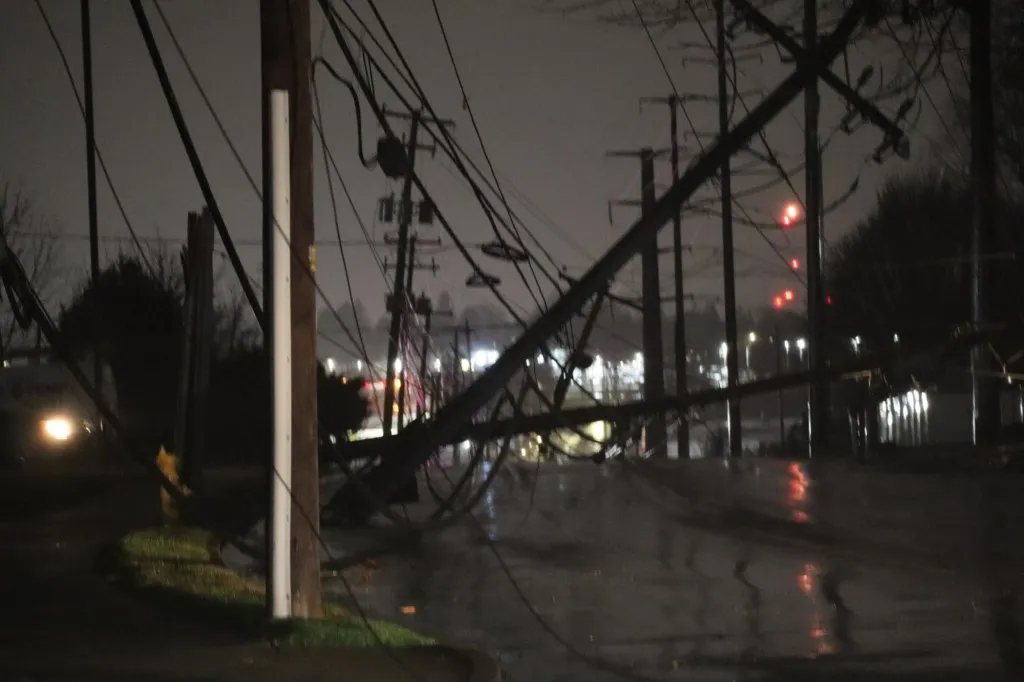
On March 17, 2026, a line of storms with heavy winds swept through the Lehigh Valley, Pennsylvania, leading to significant power outages. PPL reported that approximately 8,000 customers were without power in the area, while Met-Ed indicated that around 2,000 of its customers were also affected.
The outages were particularly concentrated in eastern Northampton County, with 3,000 outages reported. Upper Saucon Township experienced 6,500 outages, and Lower Saucon Township had about 1,800 customers without electricity.
As the situation unfolded in Pennsylvania, Cuba was grappling with a separate but severe crisis. The island experienced an island-wide power outage that affected much of its 11 million residents. This blackout was attributed to a complete disconnection of the national electrical system, a situation that has been exacerbated by ongoing fuel shortages.
Cuban officials are currently investigating the cause of the power outage. The country has not received oil shipments for more than three months, which has significantly impacted its electrical infrastructure, already suffering from deterioration due to equipment failures.
The consequences of the blackout in Cuba have been dire, with thousands of medical procedures postponed due to limited electricity. The situation highlights the critical state of Cuba’s energy resources, where 40 percent of the petroleum produced is essential for maintaining its electrical grid.
As of now, both regions continue to deal with the aftermath of these outages. In the Lehigh Valley, utility companies are working to restore power to affected customers, while in Cuba, the government is under pressure to resolve the energy crisis and restore normalcy to the lives of its citizens.
This sequence of events underscores the vulnerability of electrical systems in both regions, revealing how severe weather and infrastructure challenges can lead to widespread disruptions. The impact of these outages is felt deeply by residents, highlighting the importance of reliable energy sources.