What observers say
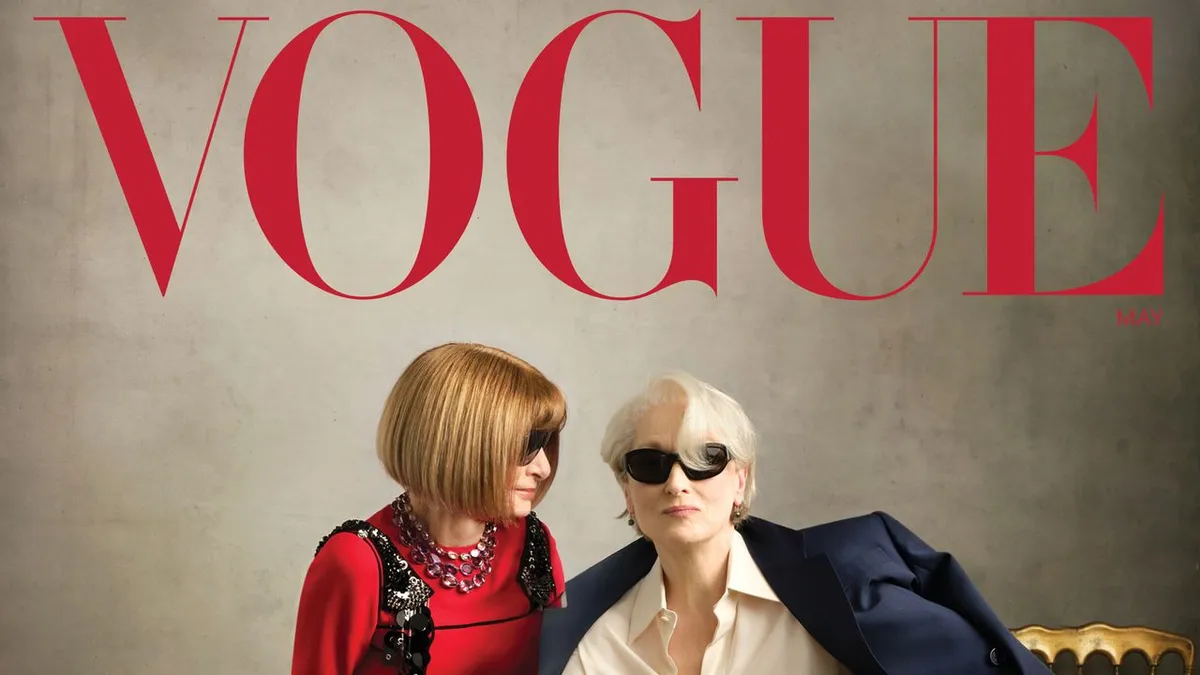
“I think the most…powerful message that our current first lady sent was in the coat that said ‘I Really Don’t Care, Do U?’ when she was going to see migrant children who were incarcerated,” remarked Meryl Streep during a recent interview. This statement, made in the context of a Vogue interview moderated by filmmaker Greta Gerwig, has reignited conversations about the implications of fashion choices made by public figures.
The controversy surrounding Melania Trump’s jacket, worn during her 2018 visit to a children’s shelter, has lingered in the public consciousness. Streep’s comments emphasize the weight of such a choice, particularly when it intersects with sensitive political issues like immigration and the treatment of children. Streep’s critique suggests that clothing can serve as a powerful medium for communication, especially for those in positions of influence.
In the same interview, Anna Wintour, the former editor-in-chief of American Vogue, offered a different perspective, stating, “To be fair, Melania Trump also always looks like herself when she dresses.” Wintour’s acknowledgment of Trump’s personal style adds another layer to the discussion, highlighting the complexity of fashion as both personal expression and public statement.
Streep further elaborated on the expectations placed on women in power, saying, “I’m stunned at how women in power have to have bare arms on television while men are covered in shirts and ties or a suit.” This observation reflects a broader societal issue regarding gender norms and the scrutiny faced by women in leadership roles. Streep’s comments resonate with many who feel that women’s fashion choices are often subjected to harsher criticism compared to their male counterparts.
As the conversation unfolded, Greta Gerwig, who moderated the interview, shared her admiration for Streep, noting, “I can definitely say that from being on set with Meryl, everybody sits up a little straighter when you’re there.” This sentiment speaks to Streep’s commanding presence and the respect she garners in both the film industry and beyond.
As the release date for “The Devil Wears Prada 2” approaches on May 1, 2026, Streep’s role as Miranda Priestly is set to reignite interest in fashion’s intersection with power and identity. The film, a sequel to the beloved original, promises to explore themes of ambition and style in a contemporary context, further fueling discussions about how women navigate these spaces.
At 76 years old, Streep continues to be a formidable voice in both the arts and social commentary. With six grandchildren under the age of six, her reflections on women’s roles and the messages conveyed through fashion are likely to resonate with a new generation. Meanwhile, Wintour, who has four grandchildren and four step-grandchildren, also embodies the evolving landscape of fashion and its impact on society.
As these discussions unfold, it remains clear that the intersection of fashion, politics, and personal identity will continue to be a topic of interest. The powerful messages conveyed through clothing choices, especially by women in the public eye, will undoubtedly remain a focal point in the ongoing dialogue about representation and influence.