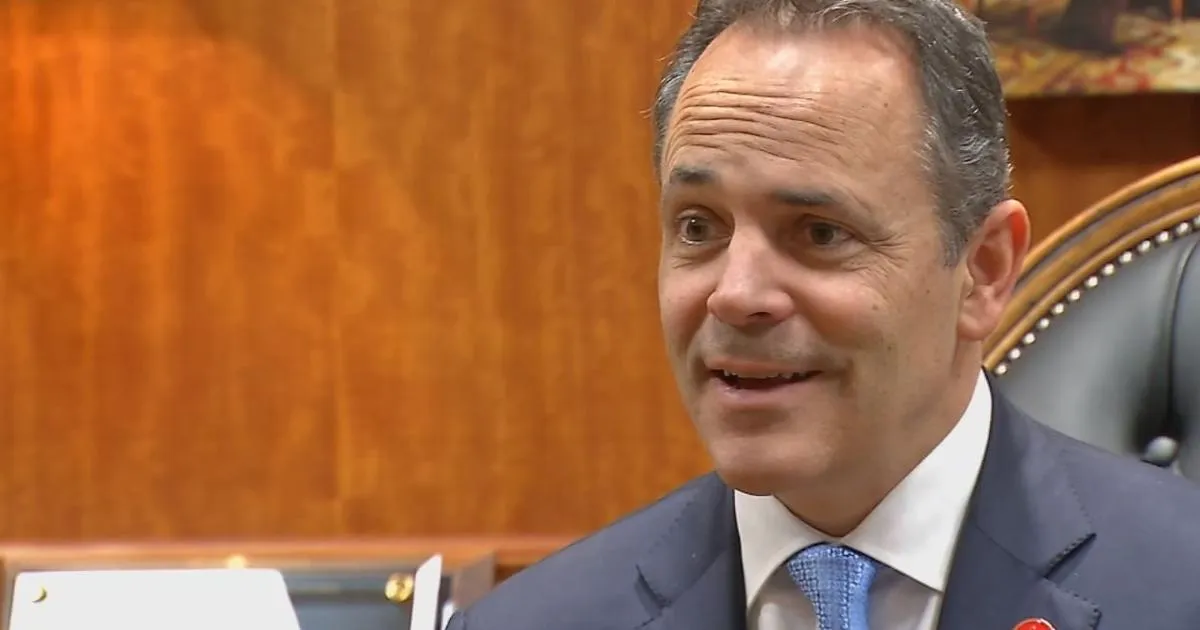
In the past, Matt Bevin, the former governor of Kentucky, was known for his political ambitions and family life, having adopted four children from Ethiopia in 2012. However, recent developments have shifted the narrative dramatically. On March 20, 2026, Bevin was found in contempt of court for failing to meet deadlines in providing financial documents related to his adopted son, Jonah Bevin.
The decisive moment came when a judge ruled that Bevin did not act in ‘good faith’ after submitting heavily redacted financial statements. This ruling led to a 60-day jail sentence imposed by a Louisville family court judge, a stark contrast to Bevin’s previous life in the public eye as a governor.
Jonah Bevin, seeking retroactive child support for his time spent in boarding schools for ‘troubled teens,’ filed an emergency motion that ultimately led to his father’s contempt ruling. The court’s decision has sent shockwaves through the Bevin family, particularly as Matt Bevin attended the court hearing via Zoom while driving, raising further concerns about his commitment to the legal proceedings.
Angela Johnson, the presiding judge, emphasized the importance of impartiality in her ruling, stating, “I cannot treat Mr. Bevin or Mrs. Bevin any differently.” This sentiment underscores the seriousness of the situation and the judicial system’s approach to family law, regardless of the individuals involved.
As the legal battle unfolds, Matt Bevin’s attorney argued that he had been in communication with Jonah Bevin’s lawyers regarding the financial documents. However, the judge’s ruling suggests that these communications did not meet the court’s expectations, leading to an active bench warrant for Bevin’s arrest due to his failure to comply with court orders.
Jonah Bevin has alleged that he was abandoned in an abusive facility in Jamaica when he was 17 years old, adding a layer of complexity to the ongoing legal disputes. The divorce between Matt and Glenna Bevin was finalized in 2025, marking a significant personal upheaval for the family.
In light of these events, Melina Hettiaratchi, a family law expert, noted, “The goal is we just need to be able to have these to be able to also negotiate in good faith.” This highlights the challenges faced by families navigating the legal system, particularly when personal relationships are strained.
As the Bevin family continues to grapple with these legal issues, the community watches closely, reflecting on the broader implications of such high-profile cases in family law. The outcome of this situation remains to be seen, but it serves as a reminder of the complexities that can arise in family dynamics, especially under public scrutiny.
Details remain unconfirmed regarding the next steps in this case, but the impact on all parties involved is undeniable as they navigate through this challenging chapter.