Background and Initial Expectations
Marjorie Taylor Greene, a prominent figure in the Republican Party, resigned from her position in January 2026 following a public rift with former President Donald Trump. Her departure left a significant vacancy in Georgia’s 14th Congressional District, prompting a special election to fill her seat. Initially, the political landscape appeared to favor a swift transition, with expectations that a strong Republican candidate would easily secure the position.
Changes in the Candidate Field
However, the dynamics shifted dramatically as the election date approached. A total of 22 candidates initially filed to run for Greene’s vacant U.S. House seat, but this number dwindled to 17 active contenders after several withdrawals. This competitive field has introduced a variety of political perspectives, making the election more unpredictable than initially anticipated.
Decisive Moments and Voter Engagement
The election is set against a backdrop of heightened voter engagement, with approximately 521,000 registered voters in the district. In the previous general election, about 378,000 votes were cast, representing roughly 74% of registered voters. This level of participation indicates a strong interest in the upcoming election, which could play a crucial role in determining the outcome.
Candidate Profiles and Financial Backing
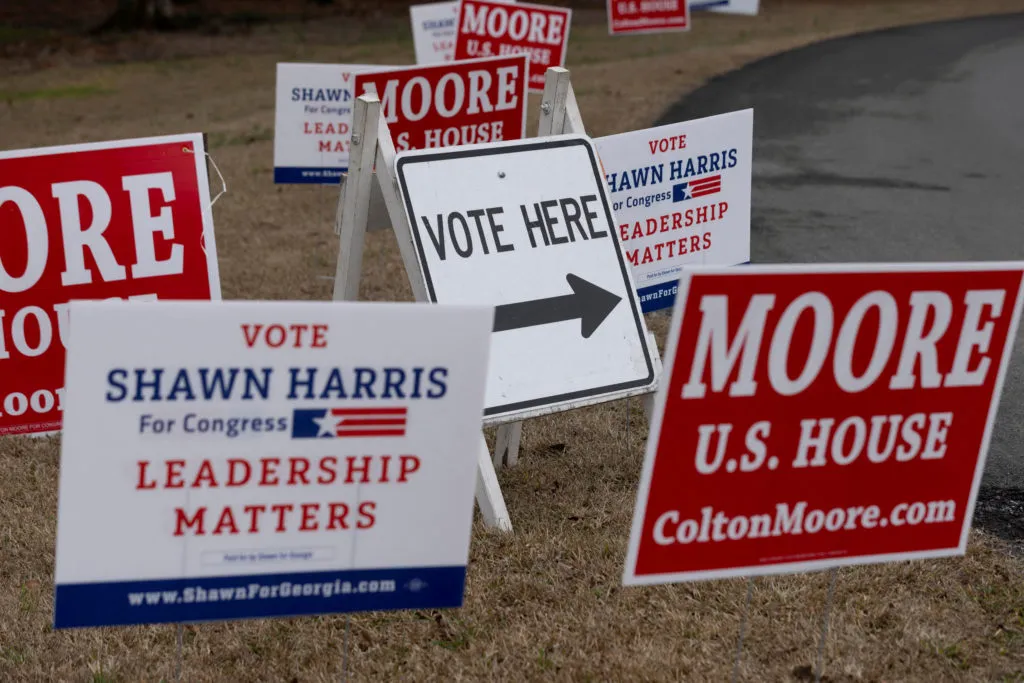
Among the candidates, Clay Fuller, a state district attorney, has garnered significant attention due to his endorsement from Donald Trump. Fuller has raised about $787,000 for his campaign, with approximately $238,000 remaining in his campaign bank. In contrast, Shawn Harris, another prominent candidate, has raised around $4.3 million, with about $290,000 available as of mid-February. Harris previously received about 36% of the district vote in his 2024 bid against Greene, who secured 63% of the vote in that election.
The Stakes for the Republican Party
The stakes are high for the Republican Party, which currently holds a slender majority in the House of Representatives. A Democratic upset in this special election could tighten the GOP margin, raising concerns among party leaders. As the election approaches, candidates are emphasizing key issues, with Harris stating, “The economy is very bad,” highlighting the economic challenges facing voters.
Expert Perspectives on the Shift
Experts are analyzing the implications of Greene’s departure and the subsequent candidate dynamics. Harris noted, “I don’t care who it is, but when we do our analysis – because Marjorie Taylor Greene was so far out there – we don’t see the Republican party, Donald Trump or the local Republican party getting somebody that’s closer to the center.” This sentiment reflects a broader concern about the party’s direction and its ability to appeal to a wider electorate.
Looking Ahead
As the election day approaches, polls are set to close at 7 p.m. ET, and the results will determine whether a candidate can secure a majority or if the top two vote-getters will advance to an April 7 runoff. The outcome of this election will not only fill Greene’s seat but also serve as a bellwether for the Republican Party’s future in Georgia and beyond. Details remain unconfirmed regarding the final voter turnout and the impact of late campaign developments.