Significant Legal Implications for Mahmoud Khalil
Mahmoud Khalil’s ongoing legal battle has raised critical questions regarding the First Amendment rights of immigrants in the United States. Khalil, who was detained for 104 days in immigration custody, has become a symbol of the challenges faced by noncitizens who speak out against U.S. policies, particularly regarding Israel.
Khalil’s detention began on March 8, 2025, and during this period, his wife gave birth to their first child, underscoring the personal toll of his legal struggles. A federal judge has ruled that the actions taken against him by the Trump administration were likely unconstitutional, highlighting the legal complexities surrounding his case.
At 30 years old, Khalil is a legal permanent resident of the U.S. His legal team, consisting of more than 20 lawyers, is fighting to keep his deportation case from being finalized, which remains tied up in court. Khalil has stated, “This case is not just about me; it’s about whether the government can detain a lawful resident for political speech.”
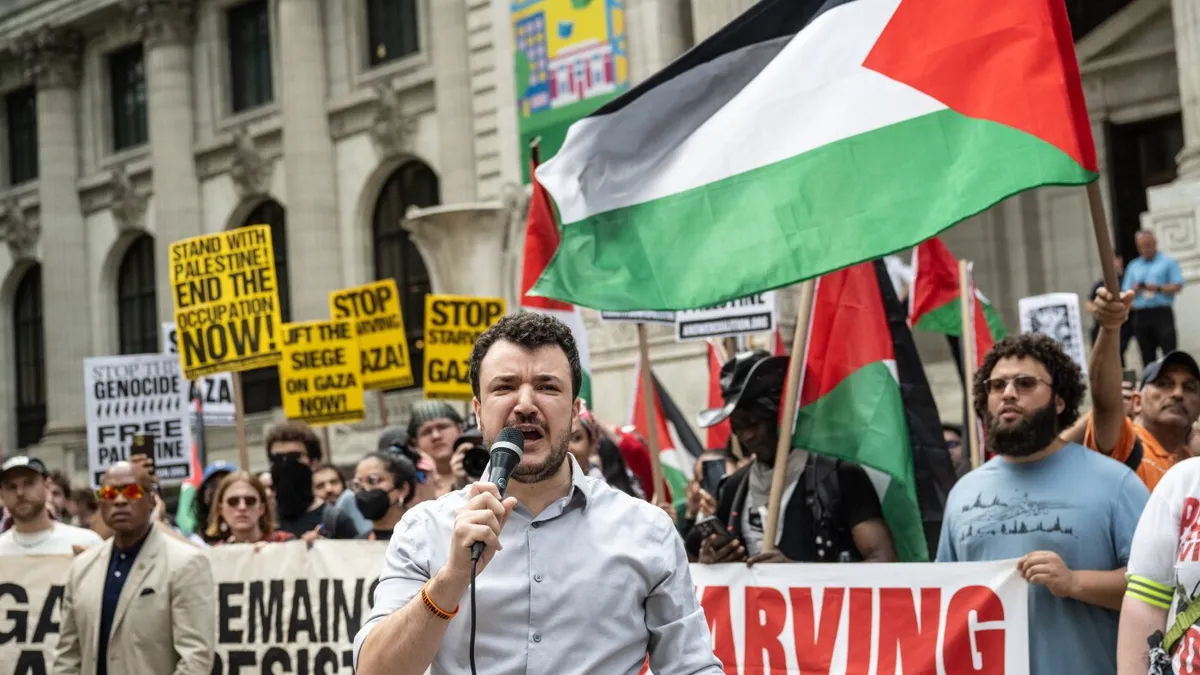
The implications of Khalil’s case extend beyond his personal situation. It is seen as a precedent-setting case for immigrant rights, particularly as it relates to political expression. Khalil’s detention has sparked protests across New York City, drawing attention to the broader issue of how the government handles dissent among noncitizens.
New York Mayor Zohran Mamdani recently hosted Khalil and his family for a Ramadan dinner, an event that garnered significant attention on social media, with Mamdani’s post receiving over 3 million views. This gathering symbolizes solidarity and support for Khalil during a challenging time.
Khalil has expressed that he was targeted for his involvement in a student movement opposing U.S. support for Israel, stating, “I was absolutely targeted for what I represent, which is a student movement that erupted against the U.S. support for Israel.” This sentiment echoes a growing concern among activists about the treatment of individuals who voice dissenting opinions.
The backdrop of Khalil’s detention is a nationwide effort to deport noncitizens who criticize U.S. foreign policy, particularly regarding Israel’s actions in Gaza. This context has raised alarms about the potential erosion of First Amendment rights for immigrants.
As Khalil’s legal battle continues, the outcome remains uncertain, with many watching closely to see how this case will influence future policies regarding immigrant rights and political speech in the United States. Details remain unconfirmed regarding the next steps in his legal proceedings.