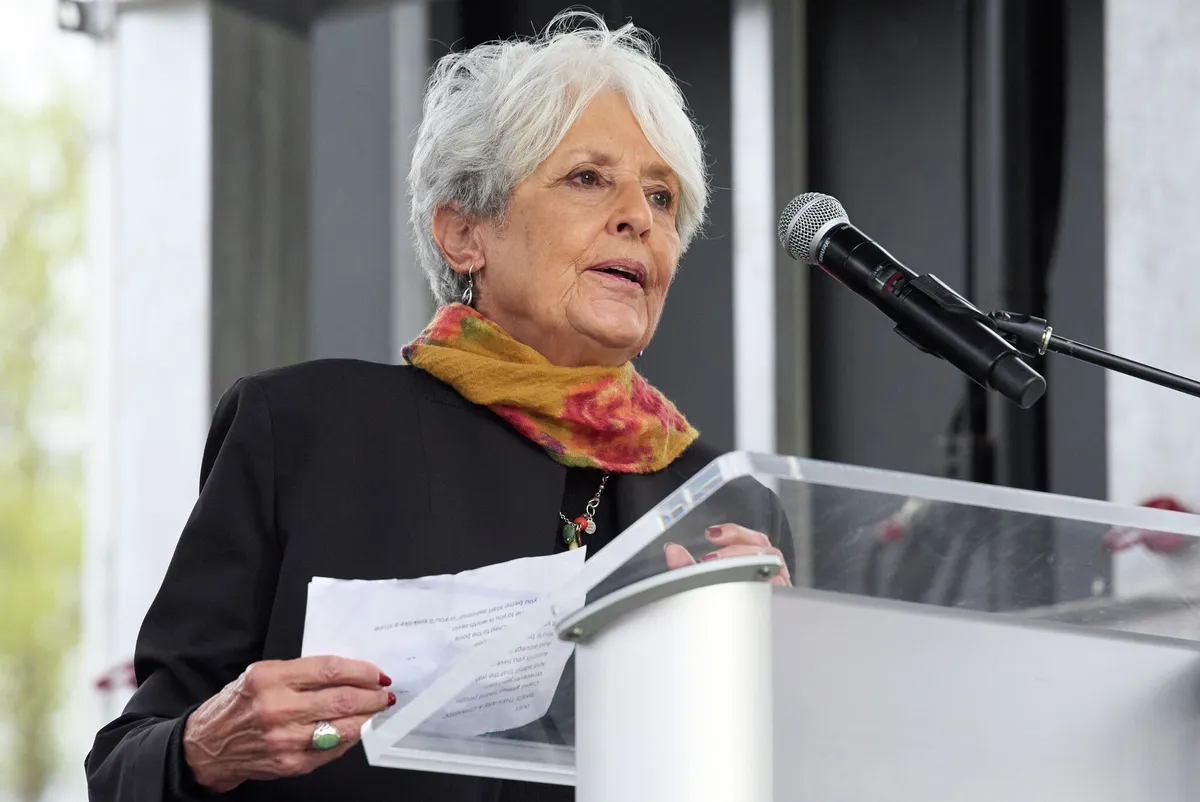
On March 27, 2026, the Kennedy Center in Washington, DC, became a focal point for artists advocating for free speech and artistic freedom. Just before the rally commenced, Joan Baez, a legendary figure in music and activism, joined fellow artist Jane Fonda to voice their concerns over recent changes at the Center, which have sparked widespread criticism.
The protest, part of the “Artists United for Our Freedoms” rally, attracted hundreds of thousands of demonstrators nationwide, reflecting a growing discontent with the current administration’s stance on artistic expression. Baez, who has a rich history of activism dating back to her performance of “We Shall Overcome” at the 1963 March on Washington, took to the stage to perform powerful songs like “The Times They Are a-Changin'” and “Ain’t Gonna Let Nobody Turn Me Around.”
As the rally unfolded, it became clear that the Kennedy Center has faced significant challenges, including declining ticket sales and recent layoffs. These issues have prompted a wave of artist boycotts and leadership changes, leading to a sense of urgency among those who cherish the arts.
During the protest, Joan Baez expressed her determination to stand firm, stating, “I considered turning in my Kennedy Center Honor, but realized that would be admitting defeat.” This sentiment resonated deeply with attendees, as many artists, including Bruce Springsteen and Billy Porter, joined her in solidarity.
Jane Fonda also spoke passionately at the rally, emphasizing the importance of fighting back against misinformation, saying, “If we don’t fight back, the news we get will be increasingly fake.” Her words echoed the concerns of many who feel that the current political climate threatens the integrity of artistic expression.
As the protest continued, it became evident that the “No Kings” movement, which advocates for the rights of artists and free speech, is expanding nationwide. This movement aims to unite artists and the general public in a collective effort to protect their rights.
Joan Baez’s presence at the rally not only highlights her commitment to activism but also serves as a reminder of the power of music and art in social movements. She concluded her performance with a heartfelt message: “I’m going to hang on to that glorious rainbow ribbon award and keep fighting like hell alongside of all of you until we restore our right to speak freely, to tell our history, to report the truth and to sing our freedom.”
As of now, the rally has sparked conversations across the country about the importance of defending artistic freedom. The White House has dismissed the criticism surrounding the Kennedy Center changes, but the voices of artists and activists continue to resonate, urging communities to unite in the face of adversity.
This sequence of events matters not only for those involved but also for the broader community, as it emphasizes the vital role that art and expression play in shaping society. The ongoing fight for free speech and artistic freedom is a cause that transcends individual artists, touching the lives of everyone who values the power of creativity.