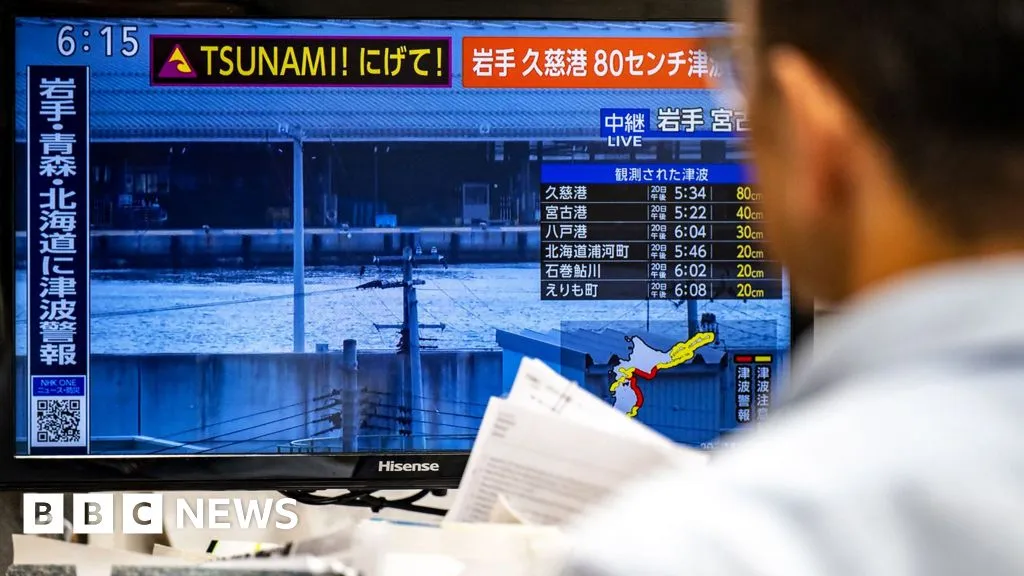
A 7.7 magnitude earthquake struck off northern Japan on April 20, 2026, injuring two people who fell during the tremor. The quake occurred at around 4:53 p.m. local time and was measured at a depth of about 19 kilometers.
This seismic event triggered a short-lived tsunami alert, with waves reaching approximately 80 centimeters at Kuji port and a smaller tsunami of 40 centimeters recorded at another port in Iwate prefecture. People were advised to remain on safe ground until warnings were lifted.
Prime Minister Sanae Takaichi emphasized the government’s commitment to emergency preparedness, stating, “The government will do our utmost in case of an emergency.” This sentiment resonates deeply in a country still haunted by the catastrophic events of March 2011, when over 22,000 lives were lost due to a magnitude 9.0 earthquake and subsequent tsunami.
As a precautionary measure, Shinkansen bullet trains connecting Tokyo and northern Japan were temporarily suspended. While the Nuclear Regulation Authority reported no abnormalities at nearby nuclear power plants, the situation remains tense.
Japan’s Meteorological Agency warned that tsunami waves could hit repeatedly, urging residents to stay vigilant. “Tsunami waves are expected to hit repeatedly. Do not leave safe ground until the warning is lifted,” they advised.
In the aftermath of this earthquake, there is a 1% chance for a megaquake in the following week—heightening concerns among residents who remember the devastation of previous disasters.
Details remain unconfirmed as authorities continue to assess the damage and ensure public safety. The community is on alert, ready to respond should further seismic activity occur.