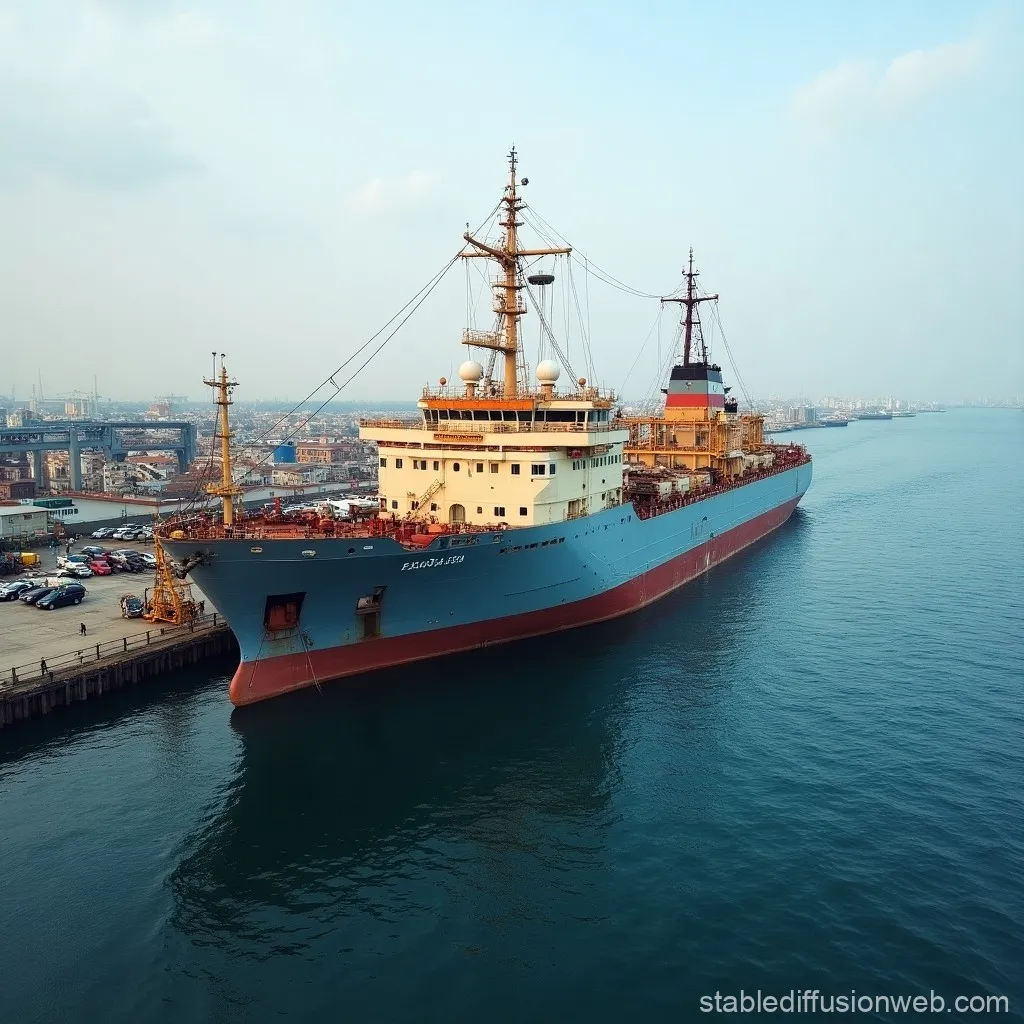
On April 19, 2026, tensions flared in the Arabian Sea as the Iranian-flagged commercial vessel Touska found itself at the center of a dramatic military operation. The ship was en route to Bandar Abbas, Iran, when it attempted to breach a naval blockade. This prompted a response from US forces.
After a six-hour standoff, US Marines boarded the Touska. The USS Spruance had already disabled the ship’s propulsion system when it failed to comply with warnings from American naval forces. President Donald Trump stated, “The Iranian crew refused to listen, so our Navy ship stopped them right in their tracks by blowing a hole in the engine room.” This decisive action marked a significant escalation in maritime confrontations.
The Touska is not just any vessel; it is under US Treasury sanctions due to its history of illegal activities. As it was seized, tensions escalated further when Iran’s military command accused the US of violating a ceasefire by firing on one of its commercial ships.
In response to this incident, Iran’s Foreign Minister warned that his country would protect its interests and national security. Abbas Araghchi remarked on America’s actions, saying, “The threats to Iranian ports, coasts, and vessels… are clear signs of America’s ill will.” Meanwhile, Trump condemned Iran’s actions in the Strait of Hormuz as violations of agreements.
The situation remains precarious. Iran vowed to retaliate for the seizure of the Touska, and reports indicate that they may take steps to protect their shipping routes. Mohammad Reza Aref emphasized that “the choice is clear regarding the security situation in the Strait of Hormuz.” The implications for maritime safety are significant.
As global shipping routes continue to be threatened by such military actions, ordinary people relying on these trade routes may feel the impact. The stakes are high—not just for governments but for families and businesses dependent on safe passage across these waters.
Details remain unconfirmed regarding Iran’s next steps following this incident. However, with both sides exchanging heated rhetoric and military posturing, it is clear that this event has heightened tensions significantly.