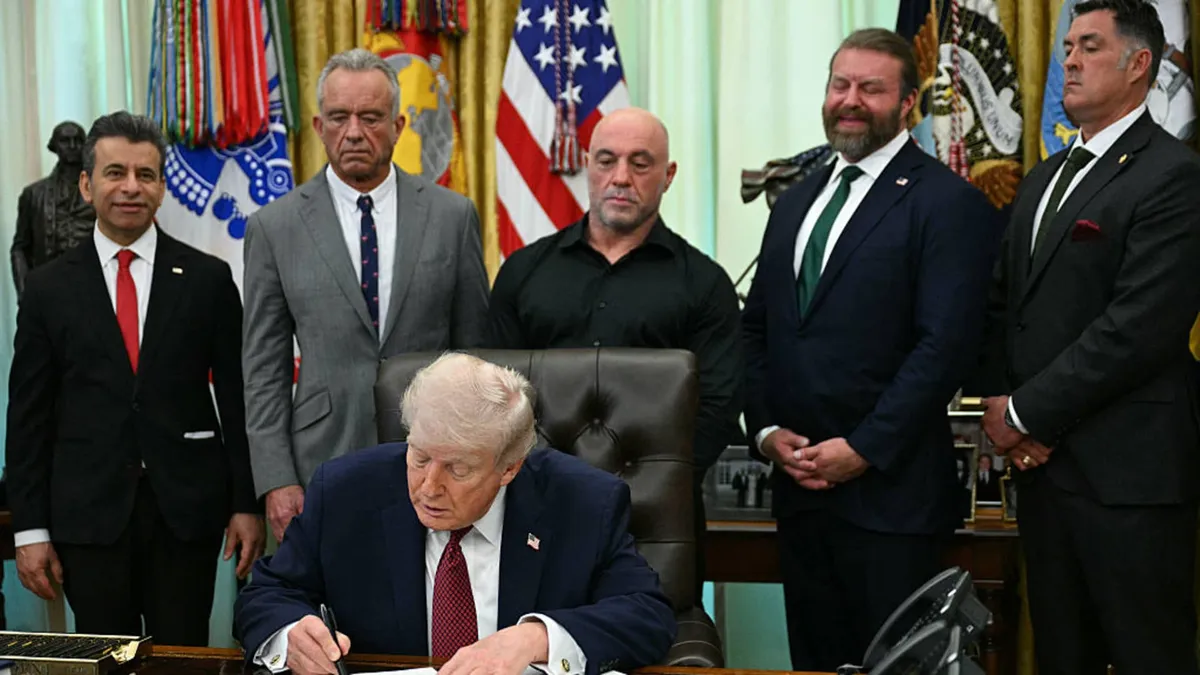
On April 18, 2026, the Oval Office was abuzz with anticipation. President Donald Trump had just signed an executive order aimed at expediting the review process for certain psychedelic drugs, including ibogaine. This marked a significant shift in how the federal government views substances that have long been classified as illegal and high-risk.
Ibogaine, derived from a shrub native to West Africa, has been controversial. It’s banned under the federal government’s most restrictive drug category, yet it has garnered attention for its potential to treat conditions like PTSD and opioid addiction. Veteran organizations have been particularly vocal about its benefits; they argue that it could be a game-changer for those grappling with debilitating symptoms.
“Today’s order will ensure that people suffering from debilitating symptoms might finally have a chance to reclaim their lives and lead a happier life,” Trump stated during the announcement. His words resonated with many, including Marcus Luttrell, a former Navy SEAL who emphasized the life-saving potential of ibogaine: “You’re going to save a lot of lives through it.”
The decision comes on the heels of Texas allocating $50 million for ibogaine research last year. This funding aims to explore the drug’s efficacy while ensuring safety protocols are in place—clinics using ibogaine typically monitor patients’ heart readings closely due to its association with irregular heart rhythms.
Despite its promise, ibogaine is not without risks. Medical literature links it to over 30 deaths, primarily due to cardiovascular complications. Still, advocates maintain that when administered correctly, it can offer profound benefits. A recent study revealed that veterans treated with ibogaine showed improvements in symptoms related to traumatic brain injury and PTSD.
Joe Rogan has also championed ibogaine’s potential: “Ibogaine, in particular, has helped a lot of people. It gives you, like, a review of your life, apparently.” His endorsement adds another layer of visibility to a treatment that many believe could revolutionize mental health care.
Yet challenges remain. The FDA’s expedited review process is not finalized; details remain unconfirmed regarding its impact on clinics and insurance coverage for treatments. While some countries have embraced ibogaine for treating opioid withdrawal symptoms, the U.S. has been slow to follow suit.
As this unfolding story continues to develop in Washington D.C., many are hopeful that the executive order will pave the way for more comprehensive research into ibogaine’s therapeutic potential—offering new avenues for healing to those who need it most.