Introduction
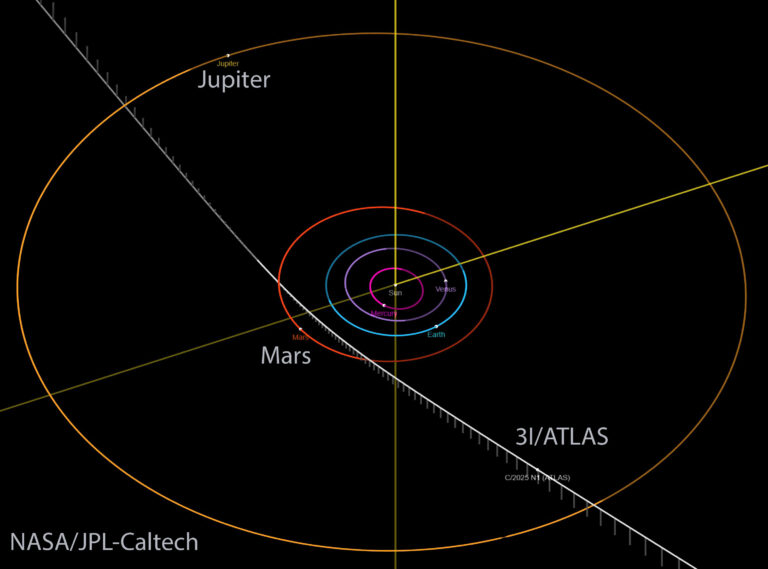
In recent years, astronomers have been captivated by a peculiar object within our solar system that challenges existing norms and theories. The identification and understanding of such strange objects are crucial for our knowledge of planetary formation, the origins of Solar System bodies, and the dynamics of celestial mechanics. This enigmatic entity has sparked widespread interest among scientists and the public alike, highlighting the importance of continuous exploration and study of our cosmic neighbourhood.
The Discovery of the Strange Object
Discovered in 2014, ‘Oumuamua’, which means ‘scout’ in Hawaiian, is an interstellar object that briefly passed through our solar system. It caught the attention of astronomers due to its unusual shape and trajectory, leading to debates about its classification. The object exhibited characteristics not typical of asteroids or comets, including an elongated form and an unexpected acceleration that could not be easily explained by gravitational influences alone.
Characteristics That Defy Explanation
‘Oumuamua’s’ most striking feature is its highly irregular shape, estimated to be at least 800 meters long and possibly cigar-shaped or pancake-like. Its brightness suggested a surface that reflects less light than typical rocky bodies, leading some to speculate about its composition being made up of metals or even an artificial construct, though this is still debated among scientists.
Moreover, astronomers noted that ‘Oumuamua’ did not display a trailing coma or tail, which are common features of comets when they approach the Sun. This oddity has generated numerous theories about its nature, ranging from a fragment of a larger body, a hydrogen iceberg, to even the possibility of being a probe from an advanced extraterrestrial civilisation, although these claims are largely speculative.
The Significance of Further Research
The peculiarities of ‘Oumuamua’ underline the need for further investigation into interstellar objects and their implications for understanding the formation of solar systems. As space observation technology advances, researchers expect to identify similar objects more frequently in the future. The insights gleaned from these celestial visitors could provide a window into the processes that shape planetary systems beyond our own.
Conclusion
The strange object ‘Oumuamua’ continues to fascinate scientists, indicating there is much more to learn about the solar system and beyond. Ongoing studies and improved instrumentation will likely yield more discoveries that challenge our current knowledge. The exploration of such strange objects may not only unravel mysteries about our solar system but could also provide evidence of other planetary systems and their histories, significantly enhancing our understanding of the universe.