Introduction
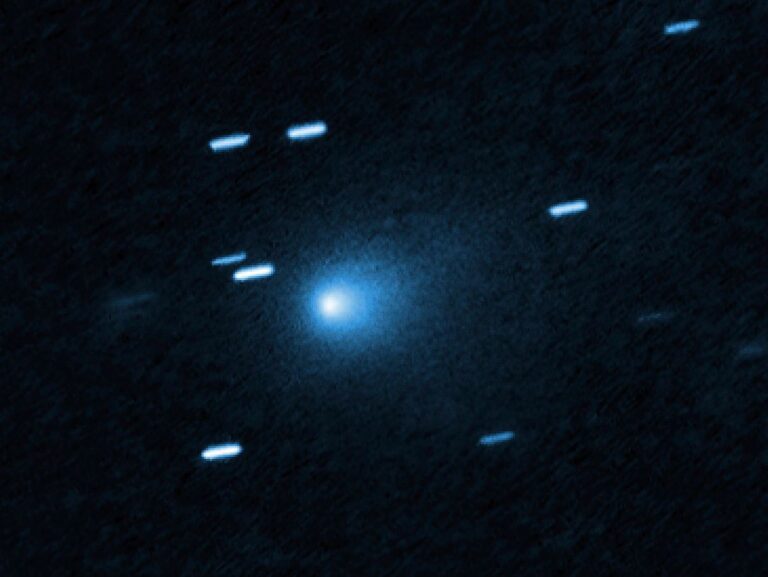
The discovery of interstellar objects entering our solar system has captivated astronomers and stargazers alike. The recently identified object, dubbed 3I Atlas, marks a significant milestone in our understanding of celestial bodies beyond our solar system. Understanding such objects can provide insights into the formation and evolution of planetary systems. As researchers delve into the characteristics of 3I Atlas, its relevance is amplified in the study of cosmic events and the broader universe.
The Discovery of 3I Atlas
3I Atlas was first detected by the Asteroid Terrestrial-impact Last Alert System (ATLAS) at a Hawaii observatory in August 2023. Observations indicated that it travels through space at a rapid speed, suggesting it originates from outside our solar system. Measuring approximately 1.2 kilometres across, 3I Atlas is classified as a cometary object due to the faint tail detected during its approach to the Sun. The discovery has garnered attention from the astronomical community due to its unique trajectory and formation history.
Characteristics of 3I Atlas
The object exhibits several intriguing features that set it apart from typical asteroids. Initial analysis suggests that 3I Atlas is composed of a mixture of ice and rock, resulting in its comet-like appearance. As it approaches the Sun, astronomers anticipate observing the development of its gas and dust tail, a phenomenon that typically occurs in comets as they heat up and release gases.
Importantly, the trajectory of 3I Atlas indicates it is on a hyperbolic path, significantly differing from the elliptical orbits of most solar system bodies. This hyperbolic trajectory confirms its classification as an interstellar object, enhancing its importance for scientific study.
Significance of 3I Atlas
The study of 3I Atlas is crucial not just for its unique characteristics, but also for what it reveals about the interstellar medium. By analysing its composition and trajectory, scientists can gain insights into the materials and conditions prevalent in other star systems. This understanding can improve models of planetary formation and evolution, aiding the quest to identify similar bodies in future observations.
Conclusion
As researchers continue to monitor and study the 3I Atlas interstellar object, it stands as a beacon of opportunity for scientific exploration. With upcoming observations planned for the following months, astronomical experts hope to gather more data, shedding light on the nature of interstellar matter. The implications of such discoveries extend beyond academic curiosity; understanding interstellar objects like 3I Atlas can ultimately expand our knowledge of the universe and our place within it.