Introduction
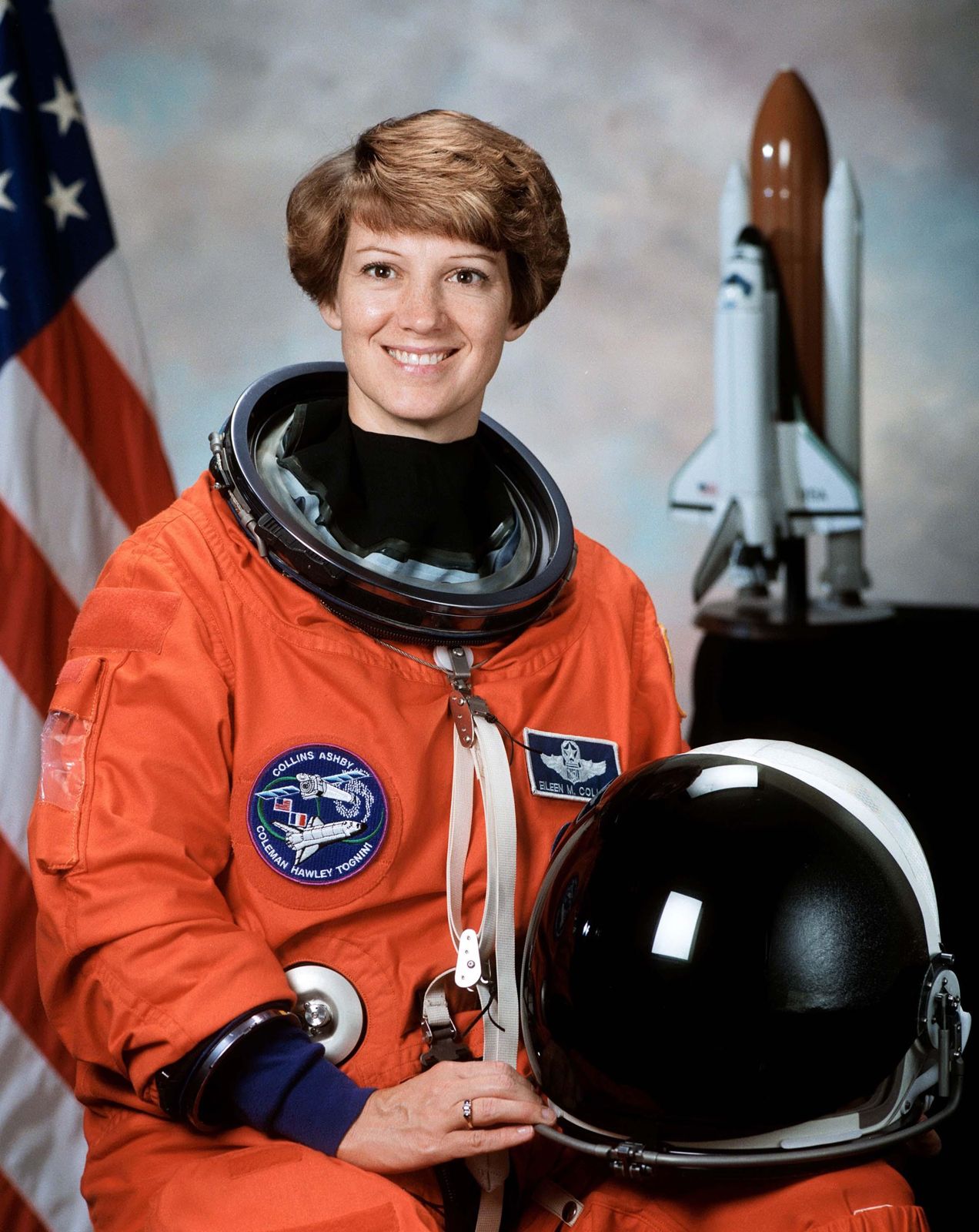
Eileen Collins, an esteemed American astronaut and retired United States Air Force Colonel, stands as a paramount figure in the history of space exploration. Her achievements have not only shattered glass ceilings but also inspired countless individuals, particularly women, to pursue careers in science, technology, engineering, and mathematics (STEM). As the first female commander of NASA’s Space Shuttle program, Collins has played a crucial role in shaping the landscape of modern space travel.
A Historic Journey
Born on November 19, 1956, in Elmira, New York, Collins’s journey to becoming an astronaut began with her passion for aviation. She earned a Bachelor of Science degree in mathematics and a Master of Science degree in operational research before joining the U.S. Air Force. After logging over 3,000 flight hours in various aircraft, Collins was selected as an astronaut candidate in 1990. Her first spaceflight took place in 1995 aboard Space Shuttle Discovery, where she served as a pilot for the STS-63 mission.
Breaking Barriers
However, it was her role as commander of the Space Shuttle Columbia during the STS-93 mission in July 1999 that marked a historic milestone, making Collins the first woman to command a space shuttle flight. This achievement was a profound moment in NASA’s history and opened doors for women in leadership roles within aerospace. Her leadership was commendable, overseeing the deployment of the Chandra X-ray Observatory, which has significantly advanced our understanding of the universe.
Legacy and Impact
Following her retirement from NASA in 2006, Collins has continued to advocate for the importance of space exploration and education. She has participated in various speaking engagements, inspiring future generations to pursue careers in space and aviation. In recognition of her contributions, she has received numerous awards, including the U.S. Astronaut Hall of Fame induction in 2009 and the NASA Distinguished Service Medal.
Conclusion
Eileen Collins’s legacy extends beyond her individual achievements; she has influenced the narrative of women in aerospace and space exploration. Her story exemplifies determination and excellence, reminding us that barriers can be broken, and new possibilities can be forged. As NASA continues to plan for future space exploration missions, including those to Mars, Collins’s contributions will undoubtedly be remembered and cherished, inspiring the next generation of astronauts to reach for the stars.



