Introduction
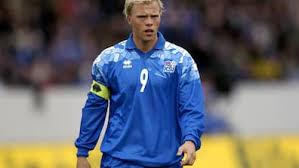
Eidur Gudjohnsen is a name that resonates with football fans worldwide, particularly those who have followed the sport since the late 1990s. As one of Iceland’s most celebrated players, Gudjohnsen’s career has spanned over two decades, showcasing his talents across various top leagues and international tournaments. His impact on Icelandic football has not only inspired future generations but has also elevated the nation’s profile on the global stage, especially in light of Iceland’s surprising success in major tournaments in recent years.
Career Highlights
Born on September 15, 1978, in Reykjavík, Iceland, Gudjohnsen began his professional career at Breiðablik before moving to the UK to join Chelsea FC in 1998. During his time at Chelsea, he became known for his versatility and tactical intelligence, playing as a forward and creating numerous scoring opportunities. Gudjohnsen’s pivotal role helped Chelsea secure an array of trophies, including two Premier League titles, an FA Cup, and two League Cups, establishing the club as a dominant force in English football.
In 2000, Gudjohnsen made his debut for the Icelandic national team and became one of their key players, earning over 80 caps. He was vital in leading Iceland through the qualifying rounds of the UEFA European Championship and the FIFA World Cup. His greatest achievement came in 2016 when Iceland stunned Europe by reaching the quarter-finals of the Euro 2016, marking the country’s first significant performance on the international stage.
Post-Career and Legacy
After leaving Chelsea in 2006, Gudjohnsen continued to play for notable clubs, including Barcelona, where he won the UEFA Champions League in 2009. Following stints in various leagues, including the Premier League, La Liga, and the Dutch Eredivisie, he retired from professional football in 2018. Since retirement, Gudjohnsen has transitioned into coaching and punditry, where he shares his insights into the game and narrates his experiences, further solidifying his status as a football ambassador.
Conclusion
Eidur Gudjohnsen’s contributions to football extend beyond his on-pitch performances. He has emerged as a role model for young athletes in Iceland and around the globe, representing the vast potential of smaller nations in the world of sport. As Iceland continues to cultivate its talent pool and aim for future successes in international competitions, Gudjohnsen’s legacy will undoubtedly remain a cornerstone of Icelandic football history and a source of inspiration for aspiring players.