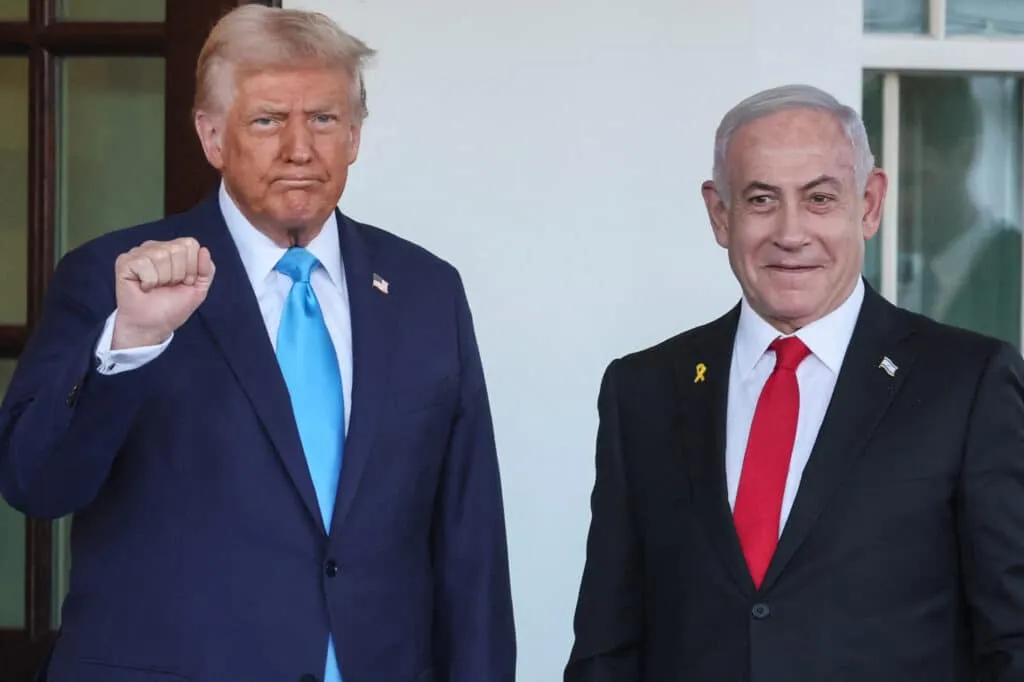
Impact of Trump’s Comments
Donald Trump’s recent assertion that the war in Iran is “very complete, pretty much” has caused unease in Jerusalem regarding the continuation of military operations against Iran. This statement comes amidst ongoing U.S. and Israeli military efforts to counter Iran’s nuclear capabilities.
Trump’s remarks highlight a significant moment in U.S.-Israel relations, particularly as Israel’s Prime Minister Benjamin Netanyahu has emphasized the war’s objective: to empower Iranian citizens to overthrow their government. The U.S. has reportedly destroyed most of Iran’s ability to produce nuclear fuel, a claim supported by U.S. officials.
In a broader context, Trump’s military strategy has historically involved rapid escalation followed by quick declarations of success. This approach has led to a complex situation where the U.S. has previously halted military operations in Yemen after a limited campaign against the Houthis.
Recent developments include missile strikes from Iran targeting a U.S. base in Iraq and an Israeli oil refinery in Haifa. These actions have resulted in casualties, including one person killed and eight injured in an Iranian attack in Bahrain, alongside 140 U.S. troops wounded in the ongoing conflict.
Trump has framed the destruction of Iran’s navy and air force as significant achievements, stating, “If for any reason mines were placed and they were not removed, the military consequences to Iran will be at a level never seen before.” This rhetoric underscores the potential for further escalation in the region.
Despite these developments, uncertainties remain regarding the exact impact of Trump’s comments on the continuation of the war. The potential for a ceasefire or a change in strategy is also unclear, leaving many observers questioning the future of U.S.-Israel military collaboration.
As the situation evolves, the responses from Iranian citizens and their government will be crucial. Ebrahim Eidi, an Iranian citizen, noted, “People are afraid to go to the streets. They are not afraid of America. Unfortunately, they are afraid of their own government.” This sentiment reflects the internal struggles within Iran amid external pressures.
Netanyahu’s assertion that the actions taken thus far are “breaking their bones” suggests a commitment to continued military efforts, but the dynamics of the conflict remain fluid. Details remain unconfirmed regarding the long-term implications of Trump’s statements and the potential shifts in military strategy.