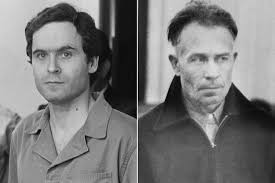
The Significance of Ed Gein and Ted Bundy in Crime History
Ed Gein and Ted Bundy are two of America’s most notorious criminals, yet the connection between them is often misunderstood. Gein, known as the ‘Butcher of Plainfield,’ was active in the 1950s and became infamous for his gruesome activities, which inspired numerous horror films and literature. Conversely, Bundy was a serial killer who terrorised the United States in the 1970s, responsible for the deaths of numerous young women across several states. Understanding whether Gein had any impact on Bundy’s apprehension is crucial to comprehending the psychology of these killers and the evolution of criminal profiling.
The Investigation of Ted Bundy
Ted Bundy was eventually apprehended in 1978 after a series of meticulous investigations by law enforcement agencies across the nation. Bundy’s evasion techniques and the methods used to track him highlight a period of intense coordination between police departments and forensic experts. Notably, the growing interest in the psychological profiles of serial killers commenced during Bundy’s reign of terror, influenced by previous criminals like Ed Gein.
Gein’s Impact on Criminal Profiling
The psychological and profile analysis that followed Gein’s heinous crimes shaped a foundation for modern criminal psychology. Law enforcement agencies began to integrate psychological evaluations and behaviours into their investigative protocols. In this way, the legacy of Ed Gein’s case created a precedent that aided investigators during Bundy’s capture; however, there is no direct evidence supporting that Gein played a role in Bundy’s arrest.
The Psychological Connection
Experts have analysed the correlations between the psychological profiles of Ed Gein and Ted Bundy. Both exhibited a disturbing fascination with death and an apparent disconnect from societal norms. While Gein’s horrific acts inspired fear and lore, it was Bundy’s persona and charm that captivated the public and made him a subject of intrigue. This comparison aids in understanding the breadth of criminal behaviour but does not suggest that Gein significantly assisted police in Bundy’s capture.
Conclusion: The Legacy of Two Infamous Figures
In summary, while Ed Gein’s crimes set a groundwork for understanding serial offenders, it is overly simplistic to suggest he directly helped law enforcement capture Ted Bundy. The investigative techniques developed in the wake of Gein’s crimes laid the groundwork for the methodologies used in Bundy’s case. However, the actual capture was the result of several years of dedicated work by police and forensic scientists who learned from past horrors to stop future ones. Understanding the past helps authorities, and society at large, not only to learn about criminals but also to search for ways to prevent such tragedies in the future.