Introduction
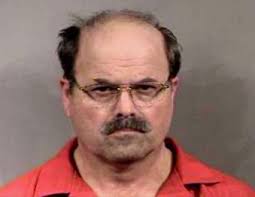
Dennis Rader, known as the BTK Killer, is one of America’s most notorious criminals, captivating the public and prompting a nationwide manhunt.
His reign of terror spanned over three decades, during which he evaded capture and taunted law enforcement agencies, making the exploration of his life and crimes especially significant today. Understanding Rader’s motivations and methods can help shed light on psychological profiling and crime prevention.
Early Life and Background
Dennis Lynn Rader was born on March 9, 1945, in Pittsburgh, Kansas. He had a relatively ordinary upbringing in a conservative household, marked by strict religious teachings and expectations. Rader’s interest in sadistic fantasies began in his teenage years. He often fantasised about murder and torture, which would foreshadow his later heinous acts.
The BTK Murders
Rader’s first confirmed murder was that of nine-year-old Josephine Otero in 1974. She was found along with her family members, a brutal start to a killing spree that would continue until 1991. The name “BTK” stands for “Bind, Torture, Kill,” which Rader used to describe his modus operandi. He would send letters to local media outlining his crimes, reveling in the fear he instilled in the community.
The Impact on Society
The killings generated widespread panic, and Rader’s taunting letters further created a pervasive atmosphere of fear. This culminated in a multi-agency task force aimed at apprehending him, which included advanced forensic techniques that were still developing at the time. Rader’s actions forced law enforcement to rethink their strategies in tracking serial killers.
Capture and Conviction
After 31 years of evasion, Dennis Rader was arrested in 2005 and later confessed to ten murders. The use of DNA from a discarded item linked him to the crimes, illustrating how technology played a crucial role in solving the case. Rader was convicted and sentenced to ten consecutive life terms without the possibility of parole.
Conclusion
The exploration of Dennis Rader’s life as the BTK Killer not only sheds light on the mind of a criminal but also highlights the advances in law enforcement and criminology. Rader’s case remains a point of discussion among true crime enthusiasts, criminologists, and law enforcement, serving as a chilling reminder of the faceless monsters that can exist in society. As DNA technology continues to improve, the hope is that such complex cases can be more effectively managed, preventing similar tragedies in the future.