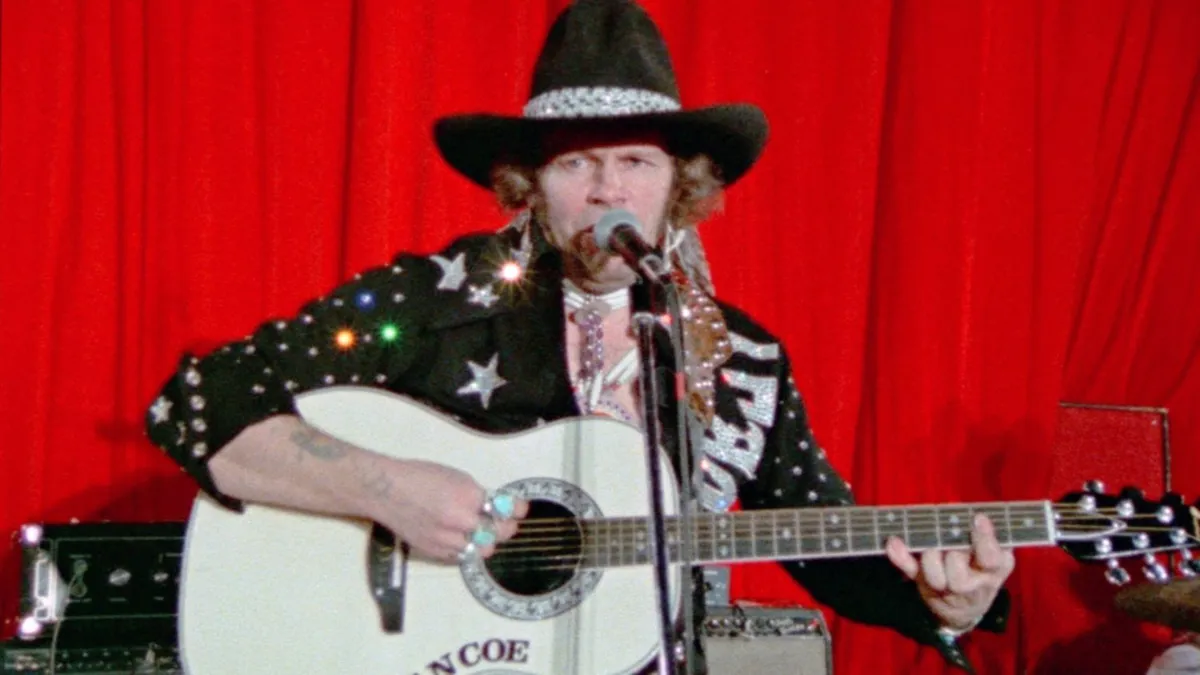
David Allan Coe, a controversial figure in country music known for his confrontational style and offensive lyrics, has passed away at 86 on April 29, 2026. Born in Akron, Ohio, in 1939, Coe became a prominent voice in the outlaw country movement during the 1970s. His music career spanned over four decades and included more than 40 studio albums.
Coe’s journey was anything but ordinary. He spent much of his early life in correctional facilities from 1963 to 1967. This experience shaped his songwriting and persona. His debut album, Penitentiary Blues, released in 1970, set the stage for a career filled with hits and controversies.
One of his most famous songs, “Take This Job and Shove It,” became a massive hit for Johnny Paycheck in 1977. Coe also penned the beloved track “You Never Even Called Me by My Name,” which resonated with fans across generations. Yet, his lyrics often sparked backlash due to their use of slurs and racial stereotypes.
Coe’s representative said, “David was a Country Music treasure and loved his fans.” Kimberly Coe, one of his children, added, “He was one of the best singers, songwriters, and performers of our time [and] never to be forgotten.” These sentiments reflect the complex legacy he leaves behind.
Despite his talent, Coe faced significant challenges throughout his life. In 2016, he was ordered to pay nearly $1 million to the IRS for tax issues. He was married six times and had four children with ex-wife Jody Lynn Coe. Yet through it all, he remained committed to his craft.
Reflecting on his time behind bars, Coe once said, “I’d have never made it through prison without my music.” His songs often served as an outlet for both personal expression and broader societal commentary.
The country music community is mourning the loss of this divisive figure. Many artists influenced by his work include legends like Willie Nelson and Tanya Tucker as well as contemporary stars like Kid Rock and Neil Young.
The future of how Coe’s music will be remembered is uncertain. His last record was released in 2006, but his impact on outlaw country continues to resonate today.