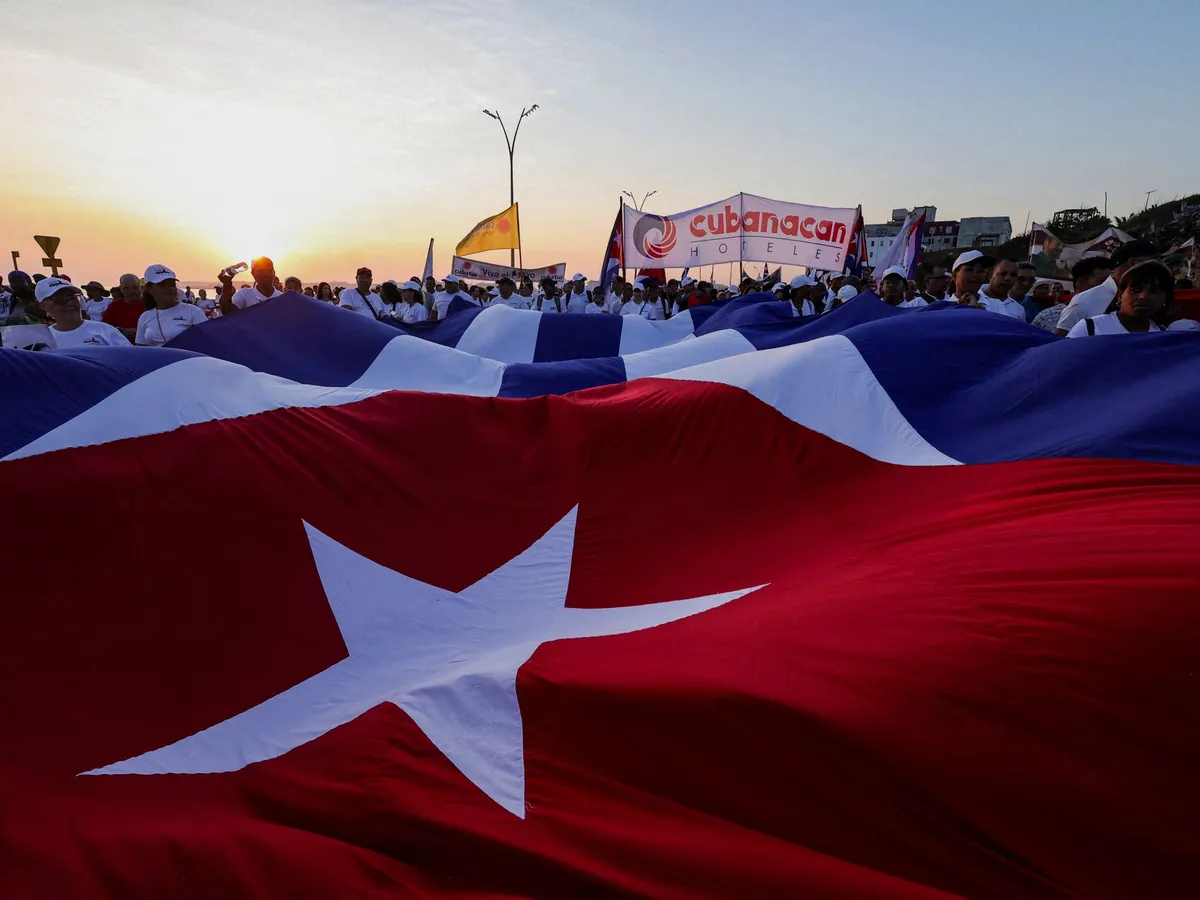
On May 1, 2026, President Donald Trump announced an expansion of sanctions against the Cuban government, describing it as an “unusual and extraordinary threat” to the United States. This escalation in US foreign policy comes at a time when many Cubans are already struggling with economic hardships exacerbated by previous sanctions.
The new sanctions specifically target individuals and groups that support the Cuban government’s security forces. Cuban Foreign Minister Bruno Rodriguez firmly rejected these measures, labeling them as “unilateral coercive measures” that violate international law. Rodriguez stated, “These measures are extraterritorial in nature and violate the United Nations Charter.” This situation highlights the ongoing tensions between Washington and Havana.
In a related development, the US Senate recently blocked a resolution aimed at preventing Trump from initiating military action against Cuba, with a vote tally of 51 to 47. The implications of this decision raise concerns about potential military involvement in addition to economic sanctions.
As these sanctions take effect, they have led to severe fuel shortages across Cuba, resulting in frequent power blackouts. Many families report struggling to maintain their daily routines amid these disruptions. Miguel Díaz-Canel, Cuba’s president, condemned the sanctions as “collective punishment against the Cuban people,” emphasizing their detrimental impact on ordinary lives.
The situation is further complicated by Trump’s remarks suggesting a potential takeover of Cuba. His statement, “Cuba is next,” has left many wondering about his intentions and whether they were made in seriousness or jest.
With these developments unfolding, it remains unclear how specific individuals or entities will be affected by the new sanctions. The Cuban economy faces significant challenges ahead as it grapples with both external pressures and internal struggles.