The Strait of Hormuz has long been a focal point of geopolitical tension, particularly involving Iran and its neighboring countries. This vital waterway is crucial for global oil transportation, carrying approximately one-fifth of the world’s oil. As tensions have escalated in the region, the international community has sought ways to ensure navigational safety and security in this critical passage.
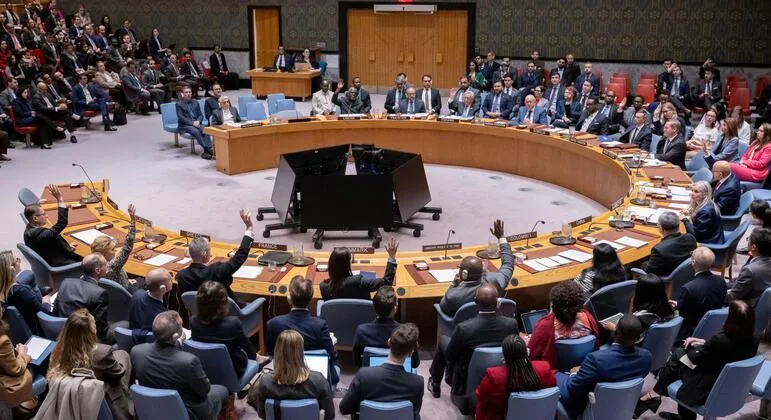
On April 11, 2026, a significant development occurred when China and Russia vetoed a UN Security Council resolution that aimed to reopen the Strait of Hormuz. The resolution, which had garnered 11 votes in favor, sought to encourage states to take measures to ensure the safety of navigation in the strait, while also demanding that Iran cease all attacks on shipping in the area. Abstentions from Colombia and Pakistan highlighted the divided opinions among member states.
Bahrain’s Foreign Minister, Abdullatif bin Rashid Al Zayani, expressed regret over the veto, stating, “Failing to adopt this resolution sends the wrong signal to the world.” His comments reflect concerns that the veto undermines efforts to stabilize the region and protect vital trade routes. The resolution was initially drafted by Bahrain in coordination with Gulf Cooperation Council member states, indicating a collective regional effort to address the escalating situation.
Interestingly, the resolution had been significantly watered down due to opposition from the veto-wielding countries. The original draft had included provisions that authorized the use of force, which were later removed in an attempt to gain broader support. This compromise, however, ultimately failed to persuade China and Russia, who argued that the resolution was one-sided and would hinder negotiations with Iran.
Russia’s envoy, Vasily Nebenzya, stated, “The adoption of such a one-sided resolution would undermine any prospect for the resumption of negotiations.” This sentiment underscores the complexities of the diplomatic landscape surrounding the Strait of Hormuz, where multiple interests converge and diverge.
The timing of the vote was particularly critical, occurring just hours before a deadline set by U.S. President Trump for Iran to reopen the strait. U.S. Ambassador Mike Waltz condemned the veto, asserting, “No one should tolerate that they are holding the global economy at gunpoint, but today, Russia and China did tolerate.” This statement reflects the heightened stakes involved, as the strait is not only a regional concern but also a matter of global economic stability.
As the situation unfolds, observers are left to ponder the implications of this veto. The UN Security Council consists of 15 countries, with five permanent members holding veto power, making consensus on such critical issues challenging. The international community will be watching closely to see how this decision impacts navigational freedom in the Strait of Hormuz and whether it will lead to further escalations in regional tensions.
In the wake of the veto, the White House press secretary, Karoline Leavitt, emphasized the urgency of the situation, stating, “The Iranian regime has until 8 p.m. Eastern Time to meet the moment and make a deal with the United States.” This deadline adds another layer of complexity to an already fraught scenario, as the world awaits Iran’s response and the potential ramifications for global oil markets and regional security.