How it unfolded
In late October, a wildlife camera was installed by the police in a tree on a vacant lot adjacent to Stephanie Santos’s home in Platte City, Missouri. This camera was focused on the backyard of Santos’s property, capturing time-lapse pictures from 7 a.m. to 7:30 p.m. over a span of three days. The installation came after previous issues involving Santos’s father, who had been reported for feeding wild cats in the area, prompting the police to take this unusual step.
As the camera began its operation, it quickly became a source of concern for Santos and her family. The intrusion into their privacy did not go unnoticed, and the city later admitted that the camera was indeed an invasion of their personal space. Mayor of Platte City acknowledged the situation, stating, “this action on our part leads to distrust of government at all levels and I am committed to taking steps to rebuild that trust with you and your family.” This statement reflects the community’s growing unease regarding surveillance measures and their implications for privacy.
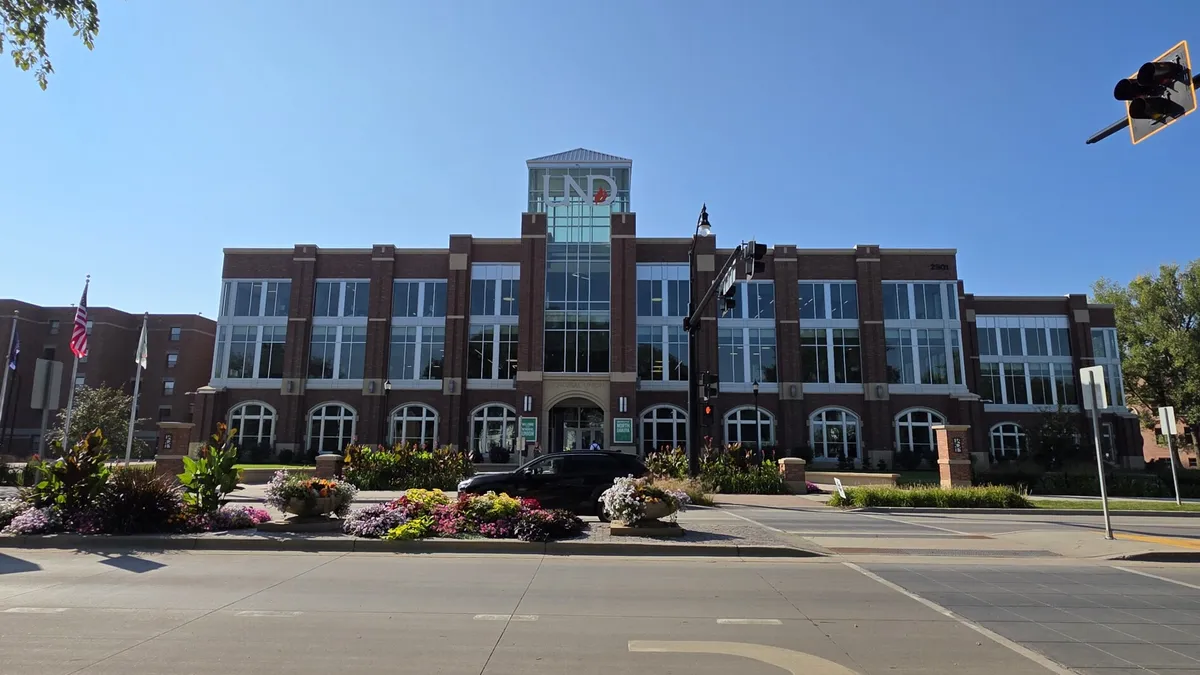
Meanwhile, across the country, the University of North Dakota Police Department was implementing a new camera system that cost approximately $1.5 to $1.8 million. This system includes both indoor and outdoor cameras placed in public spaces, aimed at enhancing campus security and assisting in investigations. Rodney Clark, a representative of the department, noted the significant improvement in camera quality, saying, “The camera quality we have now is like watching TV.” This upgrade is intended to provide a more effective means of monitoring and ensuring safety on campus.
However, the implementation of such systems does not come without risks. Just four days after the installation of a CCTV camera in Walsall, an arson attack targeted the device, highlighting the potential backlash against surveillance technology. This incident raises questions about the effectiveness and safety of such systems in public spaces, especially when they are met with resistance from the community.
The contrasting situations in Platte City and at the University of North Dakota illustrate the complex relationship between surveillance technology and community trust. While the university seeks to bolster security, the residents of Platte City are grappling with feelings of vulnerability and invasion of privacy. The installation of the wildlife camera has not only affected Santos’s family but has also sparked a broader conversation about the balance between safety and personal privacy.
As the community reflects on these events, it is clear that the implications of surveillance extend beyond mere technology; they touch upon the very fabric of trust between citizens and their government. The dialogue initiated by Santos’s situation may lead to important discussions about the ethical use of surveillance and the need for transparency in law enforcement practices.
Currently, the city is working to address the concerns raised by Santos and her family, as well as the community at large. The acknowledgment of the camera’s intrusive nature is a step towards rebuilding trust, but it remains to be seen how the city will implement changes to ensure that residents feel safe and respected in their own homes. The ongoing conversation about privacy and surveillance will undoubtedly shape the future of community relations in Platte City and beyond.