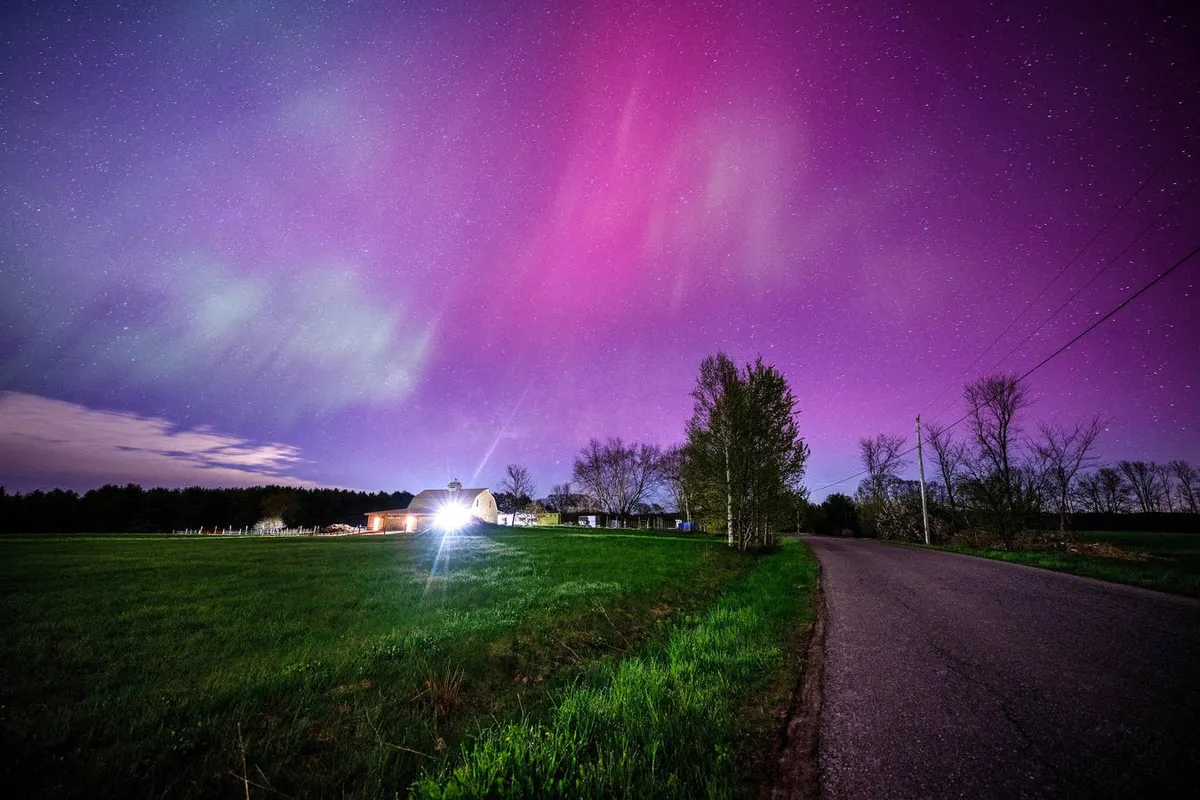
Will the northern lights be visible across the United States on March 31? Yes, thanks to a coronal mass ejection (CME) from a solar flare observed on March 30, the aurora borealis is expected to illuminate the skies from Alaska to Wyoming.
Forecasters at NOAA have predicted a Kp index of five out of nine, indicating that the auroras could be brighter and more visible further south than usual. This means that states like Montana, North Dakota, and even parts of the upper Midwest, including Minnesota and Wisconsin, may catch a glimpse of this stunning natural phenomenon.
On March 31, NOAA issued a strong geomagnetic storm watch, anticipating storms that could reach a G3 level on their scale of five. This level of activity suggests that the northern lights could potentially be visible up to 600 miles south of their typical range.
In total, 16 states may experience the aurora, including northern reaches of New York, Vermont, New Hampshire, and Maine on the East Coast. The best time to view the lights is typically between 10 p.m. and 2 a.m., just after sunset or before sunrise.
Experts warn, however, that visibility will depend on local weather conditions, such as cloud cover and rain. Details remain unconfirmed regarding the exact extent of the auroras’ reach, especially if conditions strengthen when the CME impacts Earth.
As we look forward to this celestial display, it’s important to dress warmly and be patient. Auroras can be unpredictable, often appearing suddenly and disappearing just as quickly.
For those hoping to capture the moment, remember that smartphone cameras can be set to night mode for up to three seconds, or up to 30 seconds with a tripod, to help photograph the lights.
In summary, the northern lights could twinkle over Vermont and many other states tonight, creating a magical experience for those lucky enough to witness it. So gather your friends and family, head to a dark spot, and enjoy the beauty of nature’s light show!