Anticipation of the Aurora Borealis
Before the recent developments, the visibility of the aurora borealis was largely anticipated to peak during March, as established by a 75-year data set studied by retired NASA solar physicist David Hathaway. March is often considered the best month for viewing these natural light displays, primarily due to the alignment of the Earth’s magnetic field with solar winds. However, the situation has changed dramatically with the NOAA’s latest predictions.
Decisive Moment: The G3 Geomagnetic Storm
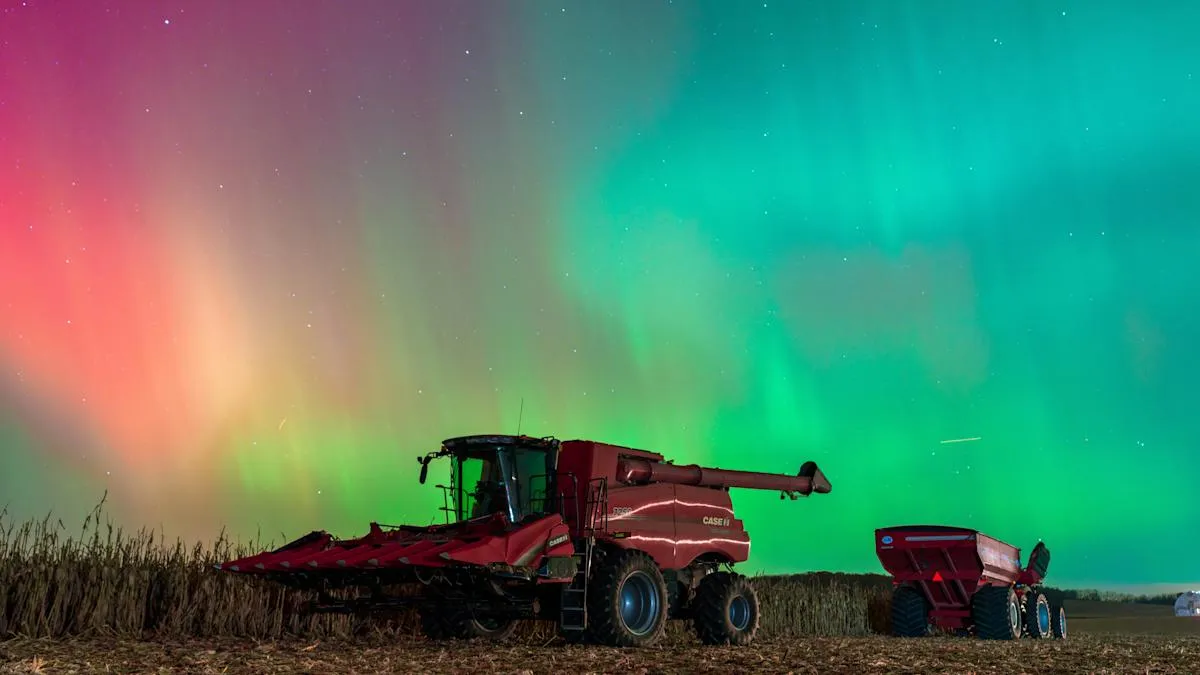
On December 9, 2025, a strong G3 geomagnetic storm is predicted to occur, following a full-halo coronal mass ejection generated by a powerful solar flare on December 6. This storm is expected to bring auroras visible from late December 8 into the early hours of December 9, and possibly again on the night of December 9. The NOAA has issued a geomagnetic storm watch, indicating that the auroras may be visible in numerous states across the northern U.S., including Alaska, Washington, Oregon, Idaho, Montana, and many others.
Direct Effects on Visibility
The implications of this geomagnetic storm are significant for both enthusiasts and casual observers alike. Caitlin Kaiser, a forecaster with the NOAA, noted that parts of the Great Lakes, Midwest, and Northeast will have the best chance of witnessing the northern lights. However, she cautioned that thick cloud cover could hinder visibility in other areas of the Northern Tier. As temperatures are expected to drop well below freezing, observers are advised to bundle up if they venture out to catch a glimpse of the auroras.
Expert Perspectives on the Shift
Experts emphasize that the auroras are caused by fast-moving solar wind impacting the Earth’s magnetic field. The current predictions mark a notable shift from the typical seasonal patterns associated with aurora visibility. While March remains a prime month for sightings, the occurrence of a G3 geomagnetic storm in December highlights the dynamic nature of space weather and its potential to surprise even seasoned observers.
Looking Ahead: Future Predictions
In addition to the immediate aurora forecast, NOAA has also issued a geomagnetic storm watch for March 6, 2026, predicting that visible auroras could extend farther south than usual. This indicates a potential for more frequent and widespread aurora sightings in the coming months, challenging the traditional understanding of seasonal visibility.
Conclusion: A Unique Opportunity
The upcoming geomagnetic storm presents a unique opportunity for those in the northern U.S. to witness the aurora borealis during a time of year when such events are not typically expected. As the solar wind continues to interact with the Earth’s magnetic field, the potential for stunning displays of light in the night sky increases, inviting both excitement and anticipation among skywatchers.
Final Thoughts
While the aurora borealis is often associated with the winter months, this December event serves as a reminder of the unpredictable nature of space weather. As observers prepare for the potential spectacle, they are encouraged to stay informed and ready to experience one of nature’s most breathtaking phenomena.