On April 6, 2026, the crew of NASA’s Artemis II mission experienced a moment that would resonate through the annals of space exploration. As they soared 4,070 miles (6,550 kilometers) above the lunar surface, they captured a stunning image of a crescent Earth setting against the backdrop of the moon’s limb. This breathtaking photograph not only marked a significant milestone for the crew but also for humanity’s ongoing journey into the cosmos.
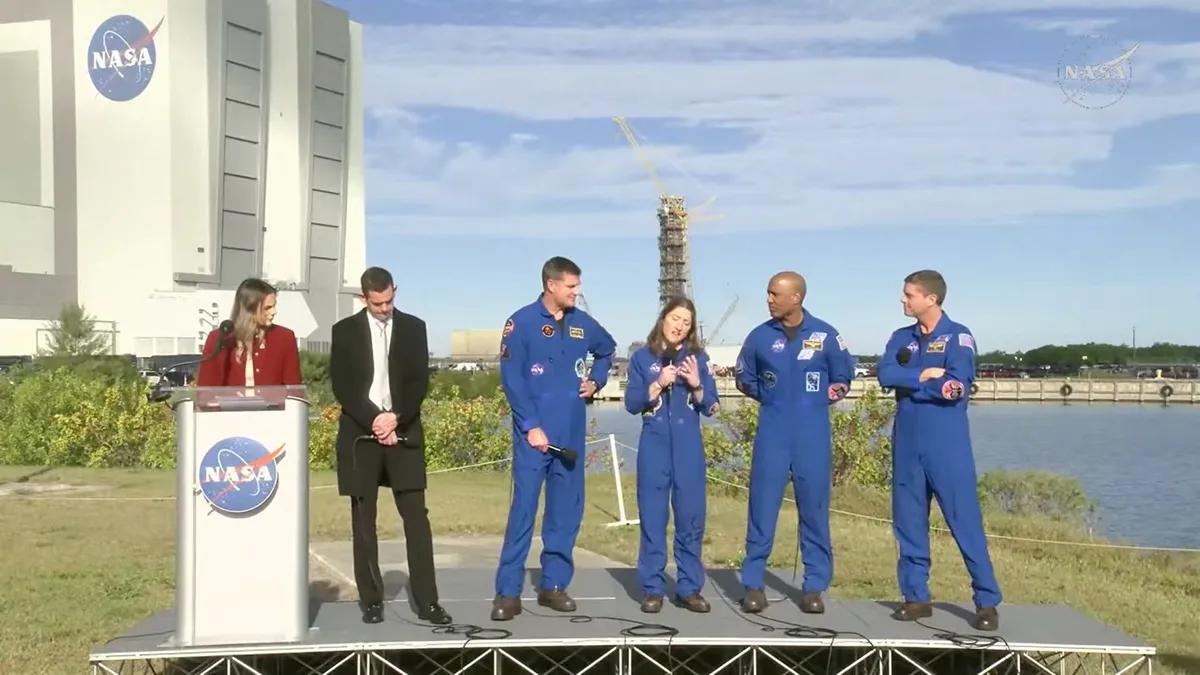
The Artemis II mission is particularly historic as it is the first crewed mission of NASA’s Artemis program, which aims to return humans to the moon and eventually pave the way for missions to Mars. The crew, consisting of Commander Reid Wiseman, Victor Glover, Christina Koch, and Jeremy Hansen, represents a new era in spaceflight, featuring the first woman, the first person of color, and the first non-U.S. citizen to fly to the moon. This diverse team embodies the spirit of inclusivity that NASA aims to promote in its future endeavors.
As the Orion spacecraft passed behind the moon, the crew entered a 31-minute communications blackout with Mission Control, heightening the anticipation of their historic Earthset capture. During this time, they shared moments of camaraderie, reflecting on their experiences and the significance of their mission. After witnessing the Earthset, the crew celebrated by sharing maple cookies, a small yet meaningful gesture that highlighted their bond and the joy of their shared journey.
Commander Reid Wiseman expressed the emotional weight of the experience, stating, “I’m actually getting chills right now — just thinking about it, my palms are sweating.” His sentiments echoed the profound impact that such moments have on astronauts, who often find themselves grappling with the vastness of space and the beauty of Earth from afar. Wiseman further remarked, “Human minds shouldn’t have to go through what these just went through,” emphasizing the unique psychological challenges faced by those venturing into the unknown.
Following the Earthset, the crew also took their own Earthrise image, reminiscent of the iconic photograph captured during the Apollo 8 mission in 1968. This connection to history serves as a reminder of the continuous thread of human exploration that links past missions to the present and future. The Artemis II crew’s journey lasted nearly 10 days, filled with scientific experiments and breathtaking views that will inspire generations to come.
The significance of the Artemis II mission extends beyond the immediate achievements of the crew. It is part of a series of increasingly complex missions designed to facilitate human exploration of the moon and Mars. As NASA looks ahead, the success of Artemis II lays the groundwork for Artemis III, which is already in the planning stages. This next mission aims to further expand our understanding of lunar science and human capabilities in space.
As the world watches the developments of the Artemis program, the Artemis II crew’s Earthset image serves as a poignant reminder of the beauty of our planet and the potential for exploration that lies ahead. With each mission, NASA continues to inspire a sense of wonder and curiosity, encouraging communities to dream big and reach for the stars. The journey of the Artemis II crew is not just a testament to their bravery but also a celebration of humanity’s collective spirit in the quest for knowledge and discovery.