Introduction
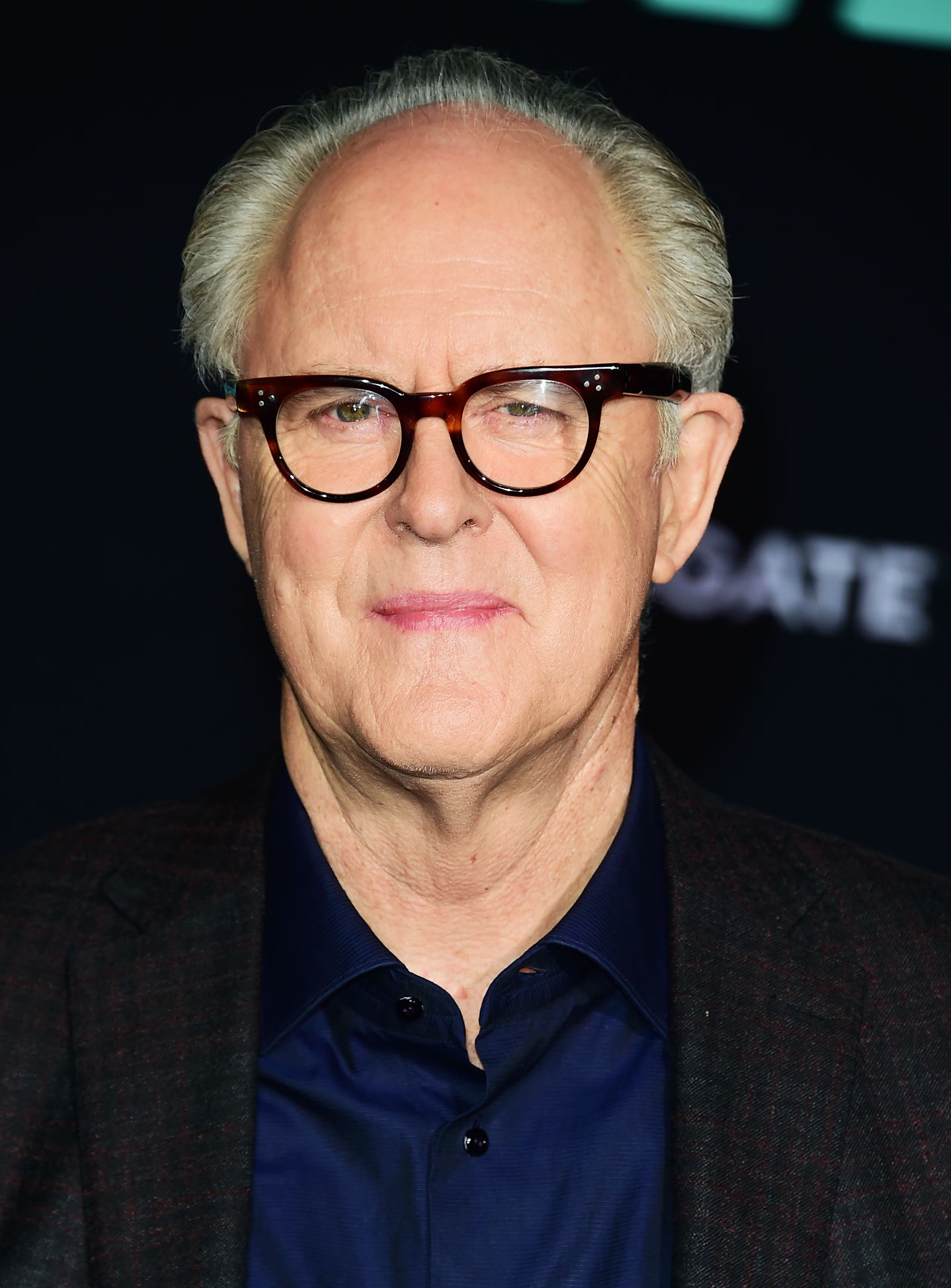
John Lithgow is a name synonymous with versatility and talent in the entertainment industry. With a career spanning over five decades, Lithgow has established himself as one of the most respected actors in film, television, and theatre. His ability to seamlessly transition between comedic and dramatic roles has garnered him numerous accolades, making him a prominent figure in contemporary acting. Understanding his career is not only important for fans of the performing arts but also offers insights into the evolution of American theatre and cinema.
Early Life and Education
Born on October 19, 1945, in Rochester, New York, Lithgow’s passion for acting was evident from an early age. He attended Harvard College, where he studied literature, and later pursued acting at the London Academy of Music and Dramatic Art (LAMDA). Lithgow’s strong academic background, combined with his classical training, laid the foundation for his dynamic career in the arts.
Career Highlights
John Lithgow’s career began on stage, where he quickly made an impression with his powerful performances in productions such as “The Changing Room” and “Requiem for a Heavyweight.” His breakthrough came with the television series “3rd Rock from the Sun” in the late 1990s, where he played the character of Dick Solomon. This role won him multiple Emmy Awards and transformed him into a household name.
In addition to television, Lithgow’s film career flourished as he starred in critically acclaimed movies including “The World According to Garp,” “Terms of Endearment,” and the recent “The Tomorrow War.” His performance as Winston Churchill in the hit series “The Crown” earned him another Primetime Emmy Award, showcasing his ability to portray complex historical figures with depth and nuance.
Recent Developments
As of 2023, Lithgow remains active in both film and stage productions. He recently appeared in the successful film “The Trial of the Chicago 7” and has taken on roles that address contemporary issues, illustrating his commitment to poignant storytelling. Additionally, Lithgow is a published author, sharing his experiences through memoirs and children’s books, further cementing his multifaceted career.
Conclusion
The legacy of John Lithgow goes beyond his impressive body of work; he represents the evolving nature of performance art in the 21st century. As he continues to take on varied roles and challenges, Lithgow’s contributions to theatre and cinema serve as an inspiration to both aspiring actors and audiences alike. Looking ahead, his future projects are highly anticipated, as he is set to further delight international audiences with his talent and charm.