Who is involved
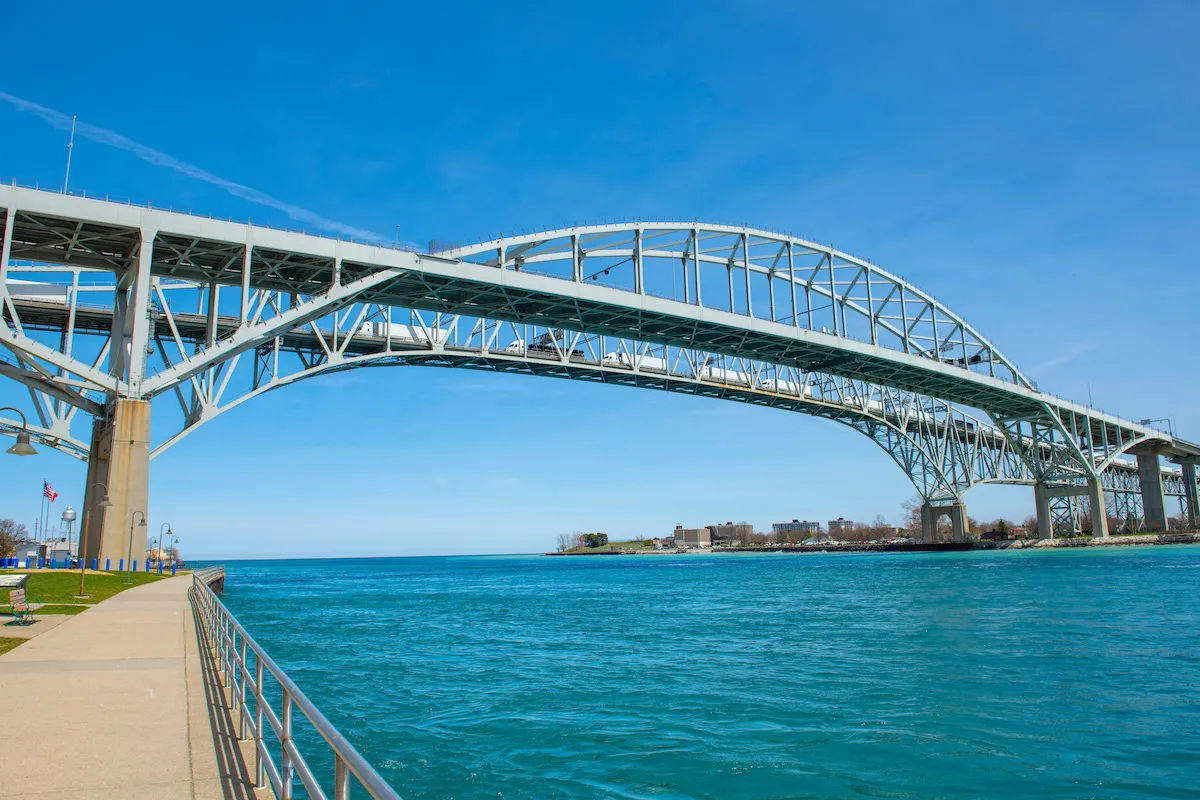
Historically, the Ambassador Bridge has been a symbol of cross-border connectivity between Michigan and Ontario, leading in commercial vehicle crossings for decades. With its towering structure and strategic location, it was once the preferred route for truckers transporting goods across the Canada-U.S. border. However, recent developments have shifted this longstanding narrative, as the Blue Water Bridge has now taken the lead in commercial traffic volume.
In 2025, the Blue Water Bridge recorded over 2.1 million commercial vehicle crossings, surpassing the 1.9 million crossings at the Ambassador Bridge. This marked a decisive moment in the transportation landscape, as the Blue Water Bridge not only captured the highest traffic numbers but also set a new standard for cross-border efficiency.
The first quarter of 2026 has further illustrated this trend. The Ambassador Bridge reported 496,796 commercial truck trips, while the Blue Water Bridge saw 531,732 trips during the same period. This shift in traffic patterns has raised eyebrows among industry experts and stakeholders, prompting discussions about the implications for the trucking community and the broader economy.
One of the significant factors contributing to this change is the toll structure at both bridges. The toll for commercial trucks at the Ambassador Bridge is set at $27 per axle, while the Blue Water Bridge offers a more competitive rate of $7 per axle. This price sensitivity has influenced truckers’ choices, leading to increased traffic at the Blue Water Bridge as they seek to minimize costs.
Stephen Laskowski, President of the Canadian Trucking Alliance, noted, “Price sensitivity entered in the market for the supply chain.” He further emphasized that historically, the Ambassador Bridge was always the leading crossing by a significant margin. The current shift in traffic patterns highlights the evolving dynamics of cross-border transportation.
Moreover, the anticipated Gordie Howe International Bridge, which has faced delays and budget overruns, remains an uncertain factor in this equation. Currently, it is reported to be about $700 million over its initial budget of $5.4 billion, and its opening date is still uncertain. Details remain unconfirmed, leaving stakeholders in a state of anticipation regarding its potential impact on cross-border traffic.
As the Blue Water Bridge continues to surpass all other international crossings in commercial traffic volume, it raises questions about the future of the Ambassador Bridge. Matti Siemiatycki, an expert in infrastructure, remarked, “No one takes on risk for free,” suggesting that the high tolls at the Ambassador Bridge may deter truckers from using this route. This evolving landscape presents both challenges and opportunities for bridge operators and the trucking industry alike.
The community surrounding the Canada-U.S. border is keenly aware of these changes, as they affect not only transportation logistics but also local economies and job markets. As truckers adapt to new routes and toll structures, the implications of this shift will continue to unfold, shaping the future of cross-border trade.